 ultimate-guide
Halal Certification for Restaurants Explained
Last Updated: November 4, 2026
Quick Summary
Halal certification for restaurants is a third-party verification that a kitchen's food, suppliers, storage, and preparation practices comply with Islamic dietary law. It is an ongoing relationship with a certifying body that audits the operation and holds it to documented standards, not a single inspection.
- The global halal food certification market was valued at $7,555.29 million in 2021 and is projected to reach $11,717.25 million by the end of 2026.
- A U.S. market analysis projects annual growth of 4.9% for halal food certification from 2026 through 2033.
- Every ingredient needs a paper trail, including sauces, breadings, oils, flavorings, and shared fryer medium.
- Verification takes about two minutes: read the certificate, check the scope, cross-reference the certifier, ask about the fryer, and check menu language.
- A halal certified symbol is not a government seal, and no single agency issues it.
Table of Contents
- What Halal Certification Means for a Restaurant
- Halal Certification Requirements in USA Kitchens
- The Difference Between Halal Meat and Regular Meat
- What the Halal Certified Symbol Actually Tells You
- How to Verify a Halal Restaurant Before You Order
- Staff Training and Digital Traceability: The Parts Most Guides Skip
- Follow the Halal Certification Trail at Lava Hot Chicken
- Frequently Asked Questions
What Halal Certification Means for a Restaurant
Halal certification for restaurants explained in plain terms is a third-party verification that a kitchen's food, suppliers, storage, and preparation practices comply with Islamic dietary law. It is not a single inspection. It is an ongoing relationship with a certifying body that audits an operation and holds it to documented standards.
The stakes are bigger than most operators assume. According to Cognitive Market Research's halal food certification market report, the global halal food certification market was valued at $7,555.29 million in 2021 and is projected to reach $11,717.25 million by the end of 2026. In the United States, a 2026 market analysis of U.S. halal food certification projects annual growth of 4.9% from 2026 through 2033.
Here is what certification actually requires, where restaurants fail audits, and how you can verify a claim before you spend a dollar.
Halal Certification Requirements in USA Kitchens
Certification requirements in the United States center on documented control of every input and every surface. A certifying body will typically examine ingredient sourcing, menu items, kitchen equipment, service areas, storage, and food-handling practices, according to Halal Expo USA's overview of the certification process. Compliance must hold across the entire supply chain and preparation process, not just at the loading dock.
Ingredient and Supply Chain Audits
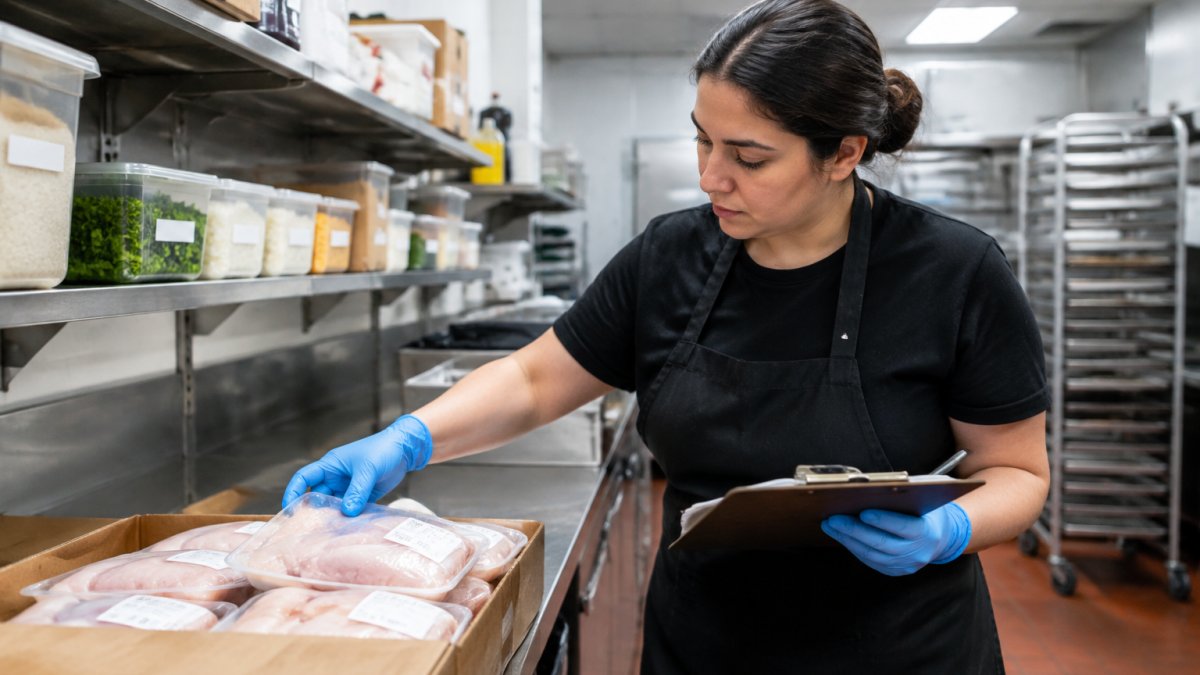
Every ingredient needs a paper trail. That includes the obvious proteins and the easy-to-miss ones: sauces, breadings, oils, flavorings, and any shared fryer medium. A supply chain audit traces each item to a supplier who can produce valid halal documentation, and it verifies that documentation has not lapsed.
A useful audit works as a three-step loop rather than a one-time file pull. First, maintain an approved-supplier list with the certifying body named, the certificate number, and the expiration date for each item. Second, require a current certificate at every receiving event and log the receiving inspection, product temperature, seal integrity, label match, and certificate date. Third, reconcile the list against purchasing records monthly so a substitute supplier cannot slip in unnoticed.
Kitchen Protocols and Cross-Contamination Controls
Storage protocols, dedicated utensils, and separation of non-halal items are the operational core. Cross-contamination control covers prep surfaces, fryer oil, cutting boards, and cleaning chemicals. Documented standard operating procedures matter more than good intentions, because the auditor is checking what you can prove.
Translate that into equipment-level controls. Color-code cutting boards and utensils by use and post the key where staff clock in. If a fryer is shared, document the oil-change and filtration schedule and the cleaning validation between product runs; if it is dedicated, label it and log who used it. Store halal proteins above or in a separate reach-in from non-halal items, and keep cleaning chemicals in a locked cabinet away from food contact surfaces.
Staff Training and Digital Traceability
Two gaps sink otherwise solid programs. The first is staff training. Line cooks, prep staff, and servers all touch compliance, and a certification audit will check whether they understand the standard operating procedures they are supposed to follow. Build short, recurring training modules around storage protocols, utensil separation, and receiving inspections.
The second gap is digital traceability. Paper binders go stale. Research published in the Journal of Islamic Marketing's study of restaurant managers found that managers running halal and halal-claimant restaurants maintained and conformed to halal practices, which suggests the discipline is achievable when it is systematized rather than improvised.
Certifier requirements are not universal, so a program built for one standard may not transfer cleanly to another. Confirm the scope of a certificate in writing before printing a halal logo on a menu.
The Difference Between Halal Meat and Regular Meat
The difference between halal meat and regular meat comes down to slaughter method, the animal's treatment, and the absence of prohibited substances.
Regular meat carries no such guarantees. It may come from animals stunned in ways that render them non-compliant, processed on shared equipment, or handled without any religious oversight.
The distinction that most guides skip is where the two supply chains actually diverge in a commercial kitchen. Three points matter operationally:
- Stunning method. Some certifiers accept reversible stunning; others require the animal to be alive and unstunned at the cut. A supplier's certificate should state which method the certifier accepts, because a certificate that is valid under one standard may not satisfy another.
- Shared processing equipment. A halal-certified slaughterhouse can still run product on lines shared with non-halal species if it documents a validated cleaning and changeover. Ask the supplier for the changeover protocol, not just the certificate.
- Further processing. Breadings, marinades, and flavorings applied after slaughter can reintroduce prohibited substances such as alcohol-based extracts or pork-derived enzymes. The certificate must cover the finished item you actually buy, not only the raw protein.
For purchasing, the practical test is a supplier questionnaire: certifying body, certificate number and expiration, slaughter method accepted, changeover protocol, and the scope of items covered. A supplier who cannot answer all five in writing is a supplier you cannot build a menu claim on.
If you want to see what compliant chicken looks like on a plate, our 50-piece boneless wings are fried in beef tallow and built for a crowd.
What the Halal Certified Symbol Actually Tells You
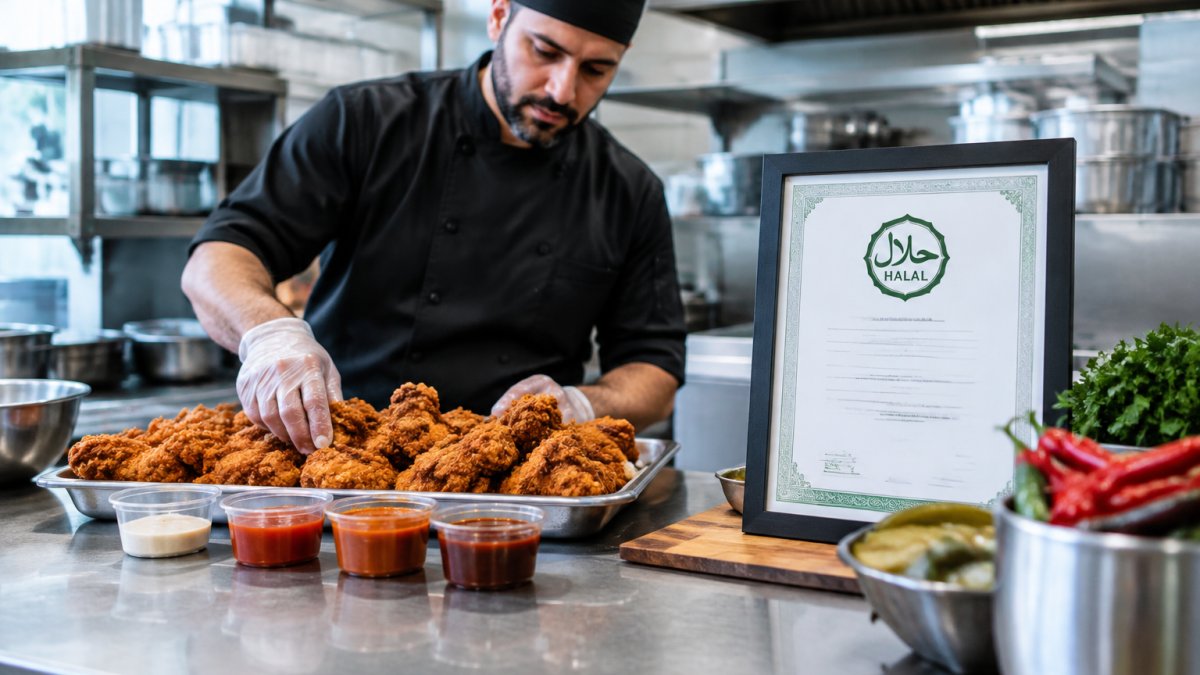
A halal certified symbol tells you that an identified certifying body has audited the operation and authorized that specific claim, for that specific scope. It is not a government seal, and no single agency issues it. Certifiers apply their own standards, and requirements around alcohol, slaughter methods, stunning, and staff qualifications vary widely from one body to the next.
That variance is why the logo alone is not enough. A symbol with no certifying organization named, no certificate number, and no way to check it is worth very little. Look for a named body and a verifiable certificate.
Churro bites make an easy add-on while you check the details.
How to Verify a Halal Restaurant Before You Order
Verification takes about two minutes and follows a repeatable path:
- Read the certificate, not the window sticker. Note the certifying body's name and the certificate's expiration date.
- Check the scope. A certificate covering a commissary kitchen may not cover the restaurant you are standing in.
- Cross-reference the certifier. Visit the certifying organization's own site and confirm the restaurant is listed as active.
- Ask about the fryer. Shared oil with non-halal items is a legitimate question, and a confident kitchen answers it without hesitation.
- Check the menu language. Vague claims like "halal-style" are a signal to ask more.
A common mistake is trusting a printed logo on a menu with no certificate behind it. In practice, the restaurants that get this right are happy to show you the paperwork.
Once a place checks out, you want something worth ordering. Our 2 sliders with fries are a fast way to test the heat ladder.
Verification takes about two minutes and follows a repeatable path.
| Step | What to do |
|---|---|
| 1 | Read the certificate, not the window sticker |
| 2 | Check the scope covers the restaurant you are in |
| 3 | Cross-reference the certifier's own site for active listing |
| 4 | Ask about the fryer and shared oil |
| 5 | Check menu language for vague claims like halal-style |
Staff Training and Digital Traceability: The Parts Most Guides Skip
Two gaps sink otherwise solid programs. The first is staff training. Line cooks, prep staff, and servers all touch compliance, and a certification audit will check whether they understand the standard operating procedures they are supposed to follow. Build short, recurring training modules around storage protocols, utensil separation, and receiving inspections. Refresh them at every certification renewal.
The second gap is digital traceability. Paper binders go stale. Research published in the Journal of Islamic Marketing's study of restaurant managers found that managers running halal and halal-claimant restaurants maintained and conformed to halal practices, which suggests the discipline is achievable when it is systematized rather than improvised.
Regional variation matters too. A certifier's requirements are not universal, so a program built for one standard may not transfer cleanly to another.
Follow the Halal Certification Trail at Lava Hot Chicken
Our chicken is halal-certified, hand-prepped, and double-dredged, with five spice levels from No Spice to pure Fire so every person at the table can choose their own heat. Our Family Meal #3 feeds a group without forcing one tolerance level on everyone.
Ask us about our certification when you visit, then finish with desserts cooked to order.
Frequently Asked Questions
Does halal certification apply to the whole restaurant or just certain menu items?
It depends on what the operator applies for. Some restaurants certify only a specific protein or menu line, keeping halal ingredients segregated with dedicated prep areas and fryers. Others certify the full operation, which means every ingredient, storage area, and food-handling practice is reviewed. Ask which scope a restaurant holds before assuming the whole kitchen qualifies. A single-certified-item kitchen can still be a good option, but you should know the boundaries.
What is the difference between halal-certified and halal-friendly?
Halal-certified means an independent certifying body has audited the operation, reviewed supplier documentation, and confirmed compliance with recognized standards. Halal-friendly usually means the restaurant serves some halal items or avoids pork and alcohol, with no third-party verification. The distinction matters because certification involves audit documentation and periodic renewal, while a halal-friendly claim is self-reported. If religious compliance is non-negotiable for you, ask for the certifier's name and confirm the certificate is current.
How can you verify a halal restaurant's certification is real?
Start with the halal certified symbol on the menu or storefront, then note the certifying body's name. Look that body up directly and confirm the restaurant appears in its active directory, and check the certificate's expiration date. Ask staff which items are covered and how halal and non-halal ingredients are kept apart. A restaurant with a genuine certification will answer these questions without hesitation and can usually produce documentation on request.
How do restaurants prevent cross-contact between halal and non-halal food?
The core controls are separation and documentation. That means dedicated fryers, grills, or prep surfaces for halal items, color-coded utensils, labeled storage that keeps non-halal products physically apart, and standard operating procedures staff follow at every shift. Suppliers must provide halal certificates for each protein, and those records are retained for audits. During a certification audit, reviewers check storage protocols, food preparation lines, and food handling practices, not just the ingredient list.
Can a restaurant serve halal meat without being halal certified?
Yes. A restaurant can buy halal meat from a certified supplier and serve it without holding its own certification. The gap is verification: without an audit, you are relying on the restaurant's word about sourcing, storage, and cross-contact controls. If certification matters to you, ask whether the restaurant itself is certified or only its supplier. The halal certified symbol on the menu should refer to the restaurant's own accreditation, not just an upstream purchase.
Is halal certification the same as food safety certification?
No. Food safety standards cover sanitation, temperature control, and handling practices that apply to every restaurant. Halal certification is a separate review focused on Islamic dietary laws: permissible ingredients, slaughter methods, separation from prohibited items like pork and alcohol, and traceability through the supply chain. Many certifiers do check general food handling practices as part of the audit, but a health inspection pass does not make a kitchen halal, and a halal certificate is not a substitute for food safety compliance.
Certification is a paper trail, and a good restaurant will show it to you. Come see how we handle ours, pick your heat level, and find your new weekly craving at Lava Hot Chicken.