 comparison
Hot Chicken Meal Prices and Value: A 2026 Comparison
Table of Contents
- How to Judge Hot Chicken Meal Prices and Value
- Hot Chicken Combo Meals: What's Actually in the Box
- Hot Chicken Portion Sizes: How Much Chicken Per Meal
- Hot Chicken Meal Deals: When Bundles Beat Single Orders
- Hot Chicken Sides and Add-Ons: The Hidden Cost of a Full Meal
- The Real Total: Tax, Delivery Fees, and Tips
- Side-by-Side Value: Hot Chicken vs. Fried Chicken Chains
- Conclusion
- Frequently Asked Questions
Last Updated: October 21, 2026
How to Judge Hot Chicken Meal Prices and Value
Hot chicken meal prices and value come down to four numbers: total chicken weight, piece count, sides included, and the all-in cost after tax and fees. At Lava Hot Chicken, we built our menu around generous portions because a hot chicken meal only feels worth it when the chicken actually fills you up.
The category has a pricing problem most diners sense but rarely name. Two combos can look identical on the board and deliver wildly different amounts of food. Below, we'll show you exactly how to price a hot chicken meal like an operator, so you stop guessing at the counter.
The Four Numbers That Decide Value
Value is not the sticker price. It's what you pay per piece of chicken and per side. A combo that includes fries and a drink at a higher price often beats a bare sandwich at a lower one once you add the extras separately. We track four numbers on every order: chicken weight in grams, piece count, side and drink inclusion, and final cost after state and local sales tax rules. Compare meals on those four and the winner is usually obvious.
Hot Chicken Combo Meals: What's Actually in the Box
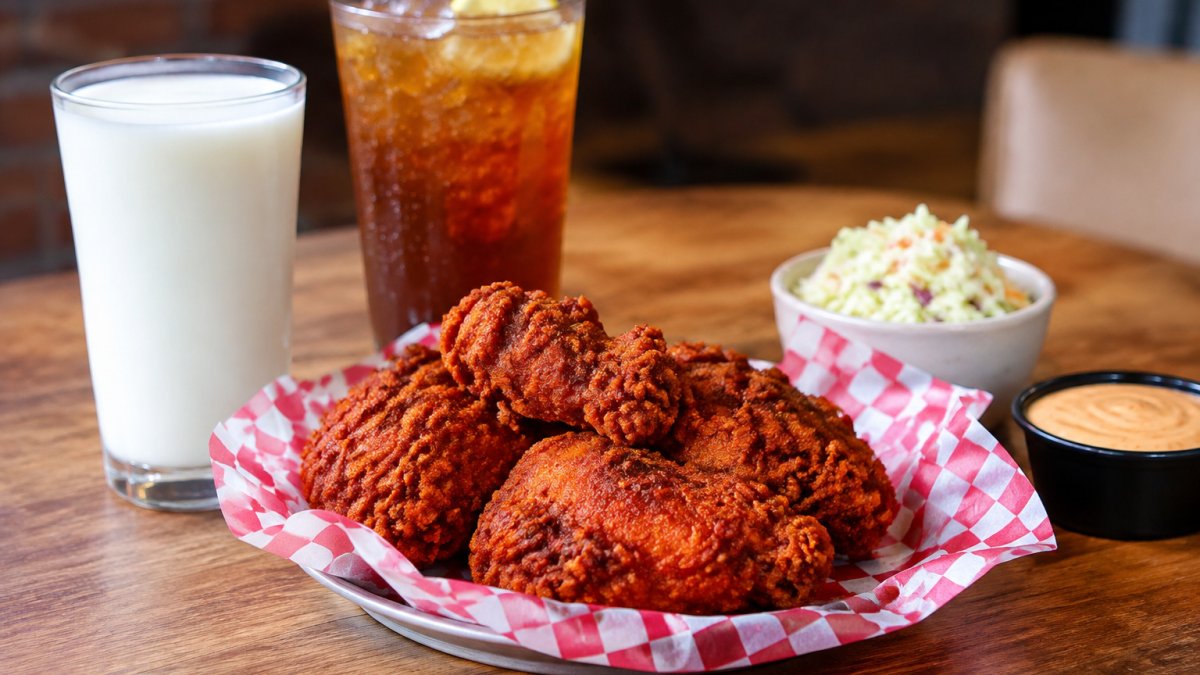
A hot chicken combo meal is a bundled order that pairs chicken with a side and a drink at a single price. The bundle discount is real, but only when the side and drink are things you'd order anyway.
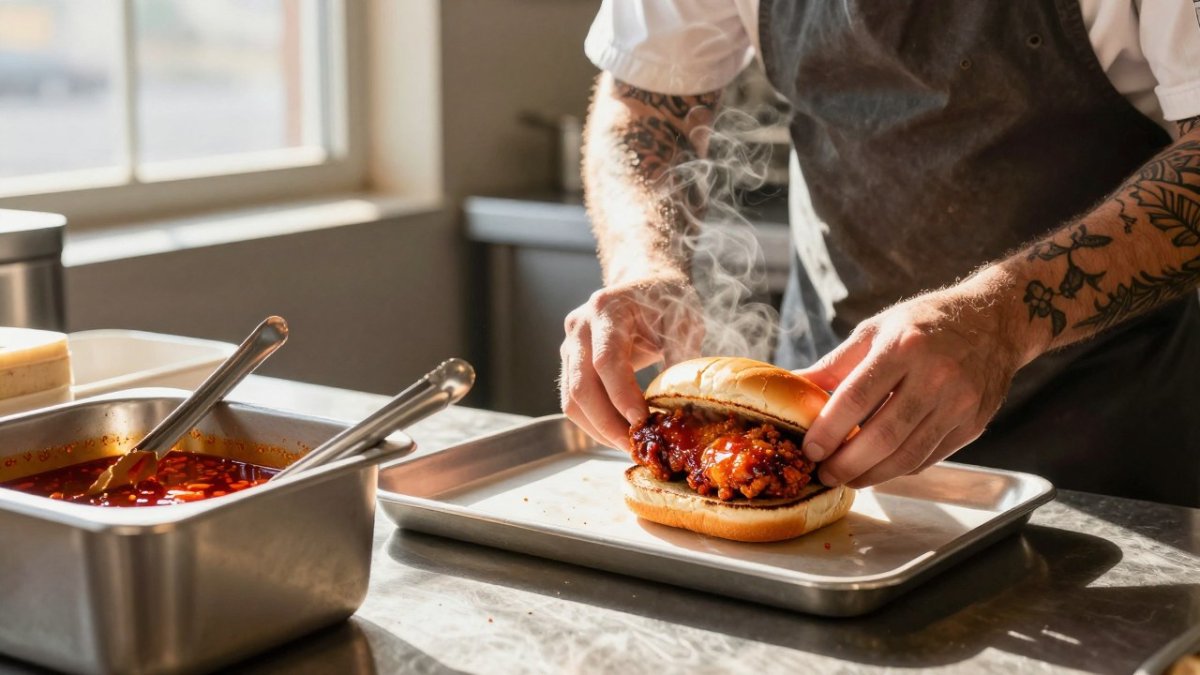
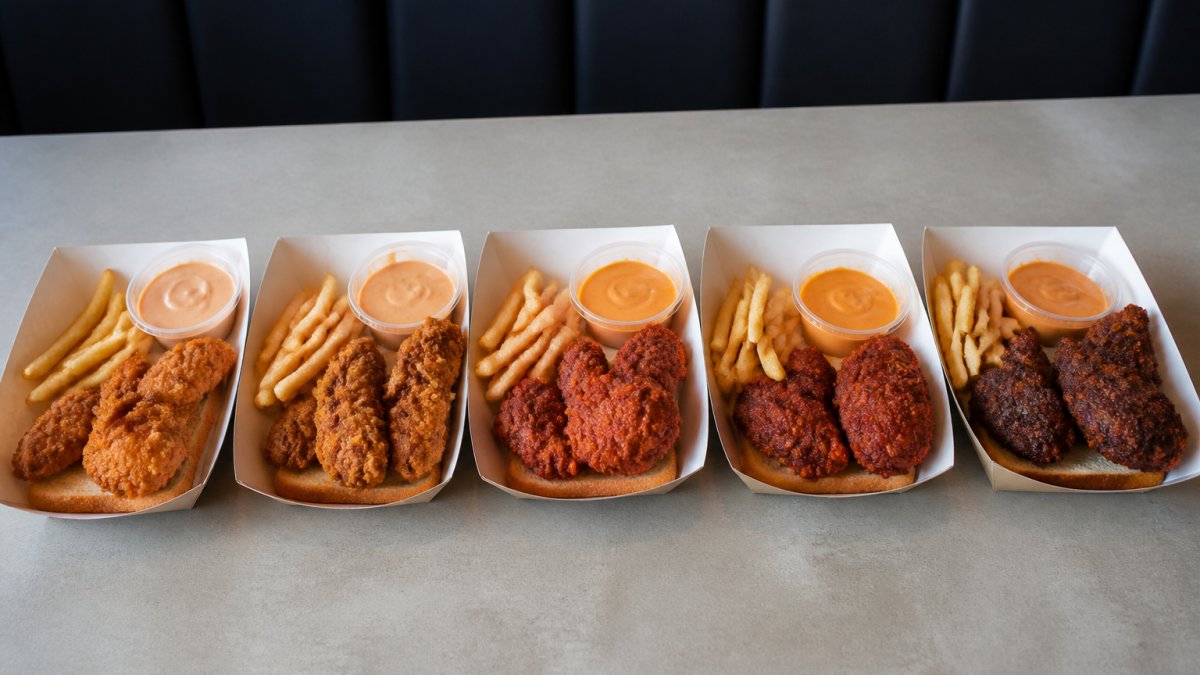
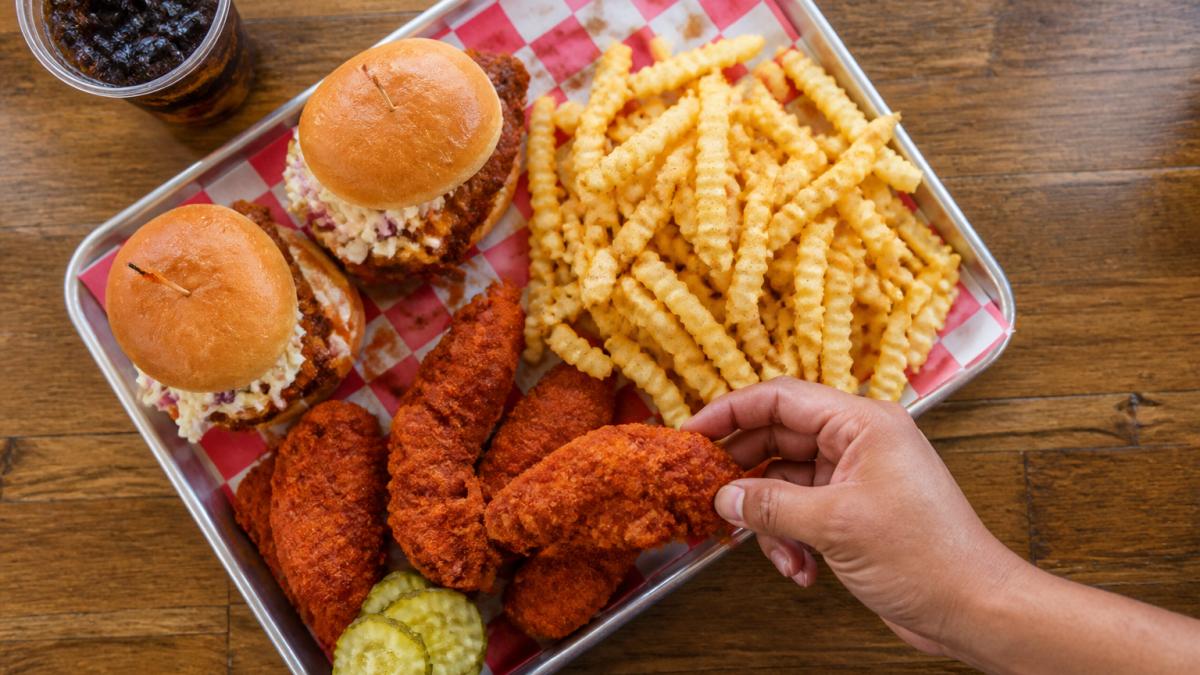
Most combos fall into two families: slider combos and tender combos. Both include fries and a drink, but they deliver different chicken. A slider combo gives you chicken on a bun with slaw and pickles. A tender combo gives you bare strips you can sauce yourself. Order the one that matches how you actually eat.
Slider Combos vs. Tender Combos
Slider combos win on convenience and texture variety. The bun, slaw, and pickle add bulk that makes a smaller amount of chicken feel like a full meal. Tender combos win on pure chicken volume and heat control, since you can dip each tender to taste.
Here's the trade-off most people miss: sliders hide the chicken. If you want to taste the breading and the heat level clearly, tenders are the honest choice. If you want a handheld meal that eats like a sandwich, go slider.
Hot Chicken Portion Sizes: How Much Chicken Per Meal
Portion size is the single biggest driver of value in hot chicken, and it is also the number most menus hide. A standard tender runs roughly a few bites, while a slider holds one piece of chicken plus toppings. The number of pieces, not the size of the box, tells you how much chicken you're actually getting.
Turn Piece Counts Into a Per-Piece Price
The fastest way to compare two meals is to divide the chicken price by the number of pieces. Strip out the side and drink first, since those are the parts that vary most.
A common pattern in the category: tenders are sold in counts of two, three, four, and five, and sliders in counts of one, two, and three. A family or group order usually scales those counts up rather than introducing new items, which is why the per-piece price tends to fall as the count rises.
What a Piece Actually Weighs
Piece count only helps if the pieces are comparable. A tender is a strip of breast meat; a slider is a single piece of chicken, often thigh or breast, on a bun. Because the bun, slaw, and pickles add bulk, a two-slider meal can feel larger than a three-tender meal even when it contains less chicken. If you are comparing across restaurants, ask whether the tenders are hand-breaded and roughly what size they run. Most practitioners find that hand-prepped, double-dredged tenders hold more breading and juice than machine-formed strips.
Calories as a Sanity Check
Calorie counts are an imperfect proxy for satisfaction, but they are a useful cross-check on portion claims. If a menu publishes calorie ranges, compare the chicken line to the fries line. When fries carry as many calories as the chicken, you are paying for potatoes, not protein.
At Lava Hot Chicken, our hand-prepped, double-dredged chicken keeps its breading through the whole meal, so the portion you pay for is the portion you eat. When you compare restaurants, weigh the chicken, not the packaging. A heavier box with more fries is not more value.
Hot Chicken Meal Deals: When Bundles Beat Single Orders
Bundles beat single orders when you're feeding more than one person or want a side and drink anyway. A family-size order spreads the cost across several people and usually lands a lower price per serving than buying individual plates.
Ordering a la carte makes sense when you skip fries or bring your own drink. Do the math once: add the price of a single sandwich plus a side plus a drink, then compare it to the combo. If the combo is lower, take the combo. If you'd skip the extras, order the plate.
Hot Chicken Sides and Add-Ons: The Hidden Cost of a Full Meal
Sides and add-ons are where a "cheap" meal quietly gets expensive. Crinkle-cut fries, loaded fries, extra pickles, mozzarella sticks, and a second drink can push a single order well past what you planned to spend.
Build your meal in two steps. First pick your chicken and heat level. Then add sides only if they fill a real gap. A tender combo with fries already covers the side, so adding loaded fries is a double order of potatoes, not a value upgrade.
Price the Sides Against the Chicken
A side is worth adding when its price is small relative to the chicken it accompanies. The practical test: if a side costs more than a third of the chicken item it sits next to, it is competing with the chicken for your budget, not supporting it. Fries are usually the cheapest way to add volume; loaded fries and mozzarella sticks are shareable upgrades that make sense for a table of three or more, where the cost per person drops. For a solo diner, the same add-on is usually the worst value on the menu.
- Crinkle-cut fries: the standard side, usually included in combos and the lowest-cost way to add volume
- Loaded fries: a meal upgrade, best shared across a table
- Pickles and slaw: low-cost crunch that balances heat and rarely moves the total much
- Mozzarella sticks: a shareable add-on, not a value play for one person
- Second drink: the most common quiet markup; check whether a refill is included before you buy another
The Combo vs. A La Carte Check
Do the math once per menu. Add the price of a single sandwich or tender order, plus a side, plus a drink, and compare that sum to the combo price. If the combo is lower, take the combo. If you would skip the fries or bring your own drink, order the plate and keep the difference. The combo only wins when you actually want all three parts.
Where the Total Actually Lands
The menu board understates the bill. Sales tax applies to the whole order, and delivery adds fees and a tip on top. A side that looks like a small add-on can be the item that pushes an order into a higher tax bracket at checkout. Price the sides at pickup first, then add the delivery markup if you plan to order in. That is the number to compare against the chicken.
The Real Total: Tax, Delivery Fees, and Tips
The menu price is never the real total. Sales tax, delivery fees, service charges, and tips can add a meaningful chunk to any hot chicken meal, and delivery orders carry the biggest markup.
Pickup usually avoids delivery fees and service charges entirely. If you order delivery, factor the fee and tip into your value math before you judge the price. A meal that looks like a deal on the menu can cost noticeably more once it lands at your door. Check your local sales tax rate through your state revenue department so you know what to expect at checkout.
Side-by-Side Value: Hot Chicken vs. Fried Chicken Chains
Hot chicken chains and traditional fried chicken chains price differently, and the gap is about more than heat. National fried chicken chains lean on value menus and large piece counts. Hot chicken concepts lean on flavor, heat customization, and premium breading.
| Factor | Hot Chicken Concepts | Traditional Fried Chicken Chains |
|---|---|---|
| Heat customization | Multiple spice levels | Usually none or mild |
| Breading style | Double-dredged, saucy | Light, crispy |
| Combo structure | Sliders or tenders + fries + drink | Pieces + sides + biscuits |
| Value focus | Portion size and flavor | Piece count and value menus |
| Dietary options | Varies; Halal available at some | Varies by chain |
Lava Hot Chicken sits on the hot chicken side with five distinct spice levels, from No Spice to Fire, plus Halal-certified chicken. That matters if you want heat you can actually choose and a meal that fits your dietary needs.
Conclusion
Judging hot chicken meal value takes five minutes of math, not a menu full of guesswork. Weigh the chicken, count the pieces, check what's bundled, and add the tax and fees before you decide. At Lava Hot Chicken, we keep the portions generous and the heat customizable so the price you pay matches the meal you get. Visit us in Rowlett or Plano for Halal-certified hot chicken with five spice levels, signature Lava Sauce, and crinkle-cut fries, and taste the value for yourself.
Frequently Asked Questions
What comes with a hot chicken combo meal?
Most hot chicken combos pair a protein with fries and a drink, and some include slaw or pickles. At Lava Hot Chicken, combos are built around sliders or tenders with crinkle-cut fries and a drink, and you pick your spice level from No Spice to Fire. Before ordering, check the item description so you know whether slaw, pickles, or a second side is included or costs extra. That single detail changes the value math more than the headline price does.
Are hot chicken combo meals better value than ordering à la carte?
Usually yes, if you actually want the fries and drink. A combo bundles three items at one price, and the gap between the combo and the sum of its parts is where the savings sit. If you skip fries or bring your own drink, à la carte can win. Run the math on your own order: price the entree, side, and drink separately, then compare. On a tender combo, the difference is often enough to cover a second side.
Are hot chicken portions large enough to share?
Many hot chicken meals are big enough for two lighter appetites, especially tender combos with fries. Customers at Lava Hot Chicken have said two people could eat off one combo. Whether it works for you depends on appetite and heat level: a Fire-level meal tends to slow down how fast anyone eats. For a family, a family-size order plus extra sides usually beats buying separate combos, and it keeps the per-person cost down.
Does a hot chicken meal usually include fries and a drink?
Combo meals almost always include fries and a drink, while individual plates typically do not. That distinction matters when comparing hot chicken meal prices across restaurants, because a $2-cheaper plate without fries is not actually cheaper. Ask whether the fries are crinkle-cut or loaded, since loaded fries carry an upcharge, and confirm the drink size. If you order delivery, factor in fees and tip before you call one meal the better deal.