 how-to
7 Hot Chicken Spice Levels Explained Before You Order
Last Updated: October 25, 2026
Quick Summary
Hot chicken spice levels work through a dry rub or oil-and-spice coating applied before or after frying, not through a single universal scale. Most menus run five to seven levels, but the names vary by restaurant, so "Hot" at one spot may feel like "Medium" at another. Treat the label as the restaurant's own ladder, not a standardized rating.
- Heat comes from a dry rub worked into the breading or a hot oil brushed on after frying.
- The jump from Mild to Medium is usually small, but Hot to Fire is not.
- Pick one level below what you think you can handle for your first order.
- Milk beats water for cooling a capsaicin burn because capsaicin is fat-soluble.
- Ask which level most staff order at a new restaurant for a better guide.
Table of Contents
- How Hot Chicken Spice Levels Actually Work
- Hot Chicken Spice Levels Explained: No Heat to Extreme
- Scoville Ratings and Why They Do Not Predict Your Burn
- How to Choose a Hot Chicken Spice Level for Your First Order
- Is a Spicy Chicken Sandwich Hotter Than Buffalo Chicken?
- How to Cool Down Spicy Chicken Without Killing the Flavor
- Ordering Your First Lava Hot Chicken Meal
- Frequently Asked Questions
How Hot Chicken Spice Levels Actually Work
Hot chicken spice levels work through a dry rub or oil-and-spice coating applied before or after frying, not through a single universal scale. At Lava Hot Chicken, we build five distinct levels from No Spice to pure Fire, and each one changes both the burn and the flavor.
The heat itself comes from capsaicin, the compound in chili peppers. A peer-reviewed study on spicy food liking found that social influences and repeated exposure both shape how much heat a person enjoys. In other words, your tolerance is trainable.
Dry Rub, Hot Oil, and Where the Heat Comes From
Heat in hot chicken comes from two main sources: a dry rub of cayenne and chili powder worked into the breading, and a hot oil or oil-and-spice mixture brushed on after frying. Nashville hot chicken traditionally leans on the oil-and-spice paste. Many restaurants apply a dry rub before frying so the seasoning cooks into the crust.
The difference matters. A dry rub applied before frying gives an even, building heat. A hot oil finish hits faster and sits on the surface. Some kitchens use both. At Lava Hot Chicken, our hand-prepped, double-dredged chicken gets its heat layered in.
Hot Chicken Spice Levels Explained: No Heat to Extreme
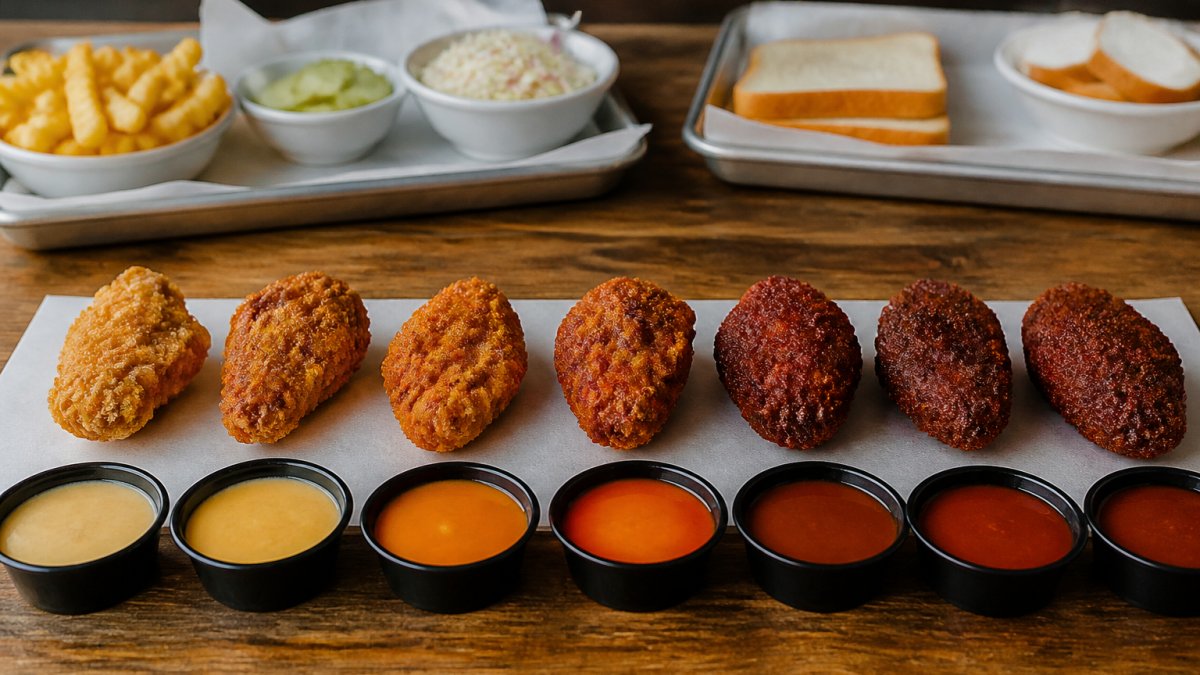
Most hot chicken menus run five to seven levels, and the names vary by restaurant. Others list five. There is no shared measurement between them, so "Hot" at one spot may feel like "Medium" at another. That is the single most important thing to understand before you order: the label is the restaurant's own ladder, not a standardized rating.
Here is how a typical five-level ladder works, with what each level usually means in practice:
- No Spice - seasoning and crunch, zero burn. Good for kids and heat-averse eaters.
- Mild - a gentle spice kick. Flavor leads, heat follows. Most people can eat a full portion without needing a drink.
- Medium - a clear, building burn that most people can handle. The heat arrives after a few bites and fades between them.
- Hot - a real test. The heat builds through the bite and lingers. Many first-timers underestimate this level.
- Fire or Extreme - the top rung. For chili-heads only. The burn often outlasts the meal.
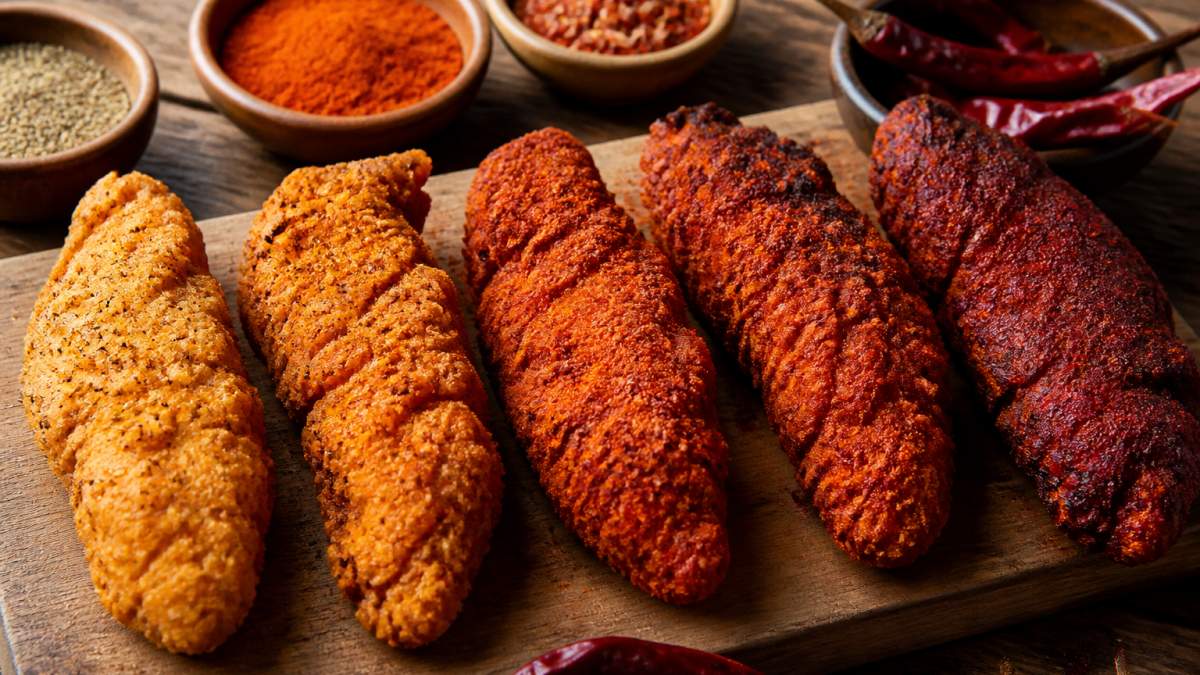
The jump from Mild to Medium is usually small. The jump from Hot to Fire is not.
Translating Labels Across Restaurants
Because there is no shared scale, the same word can mean different things at different counters. A practical way to compare is to ask two questions before ordering: how many levels does the menu have, and what is the middle level called? A five-level menu where "Medium" is the third rung usually puts "Hot" closer to a seven-level menu's "Medium-Hot." A seven-level menu with a "Reaper" top end often has a wider gap between its middle and top than a five-level menu does.
A side-by-side comparison of common label patterns helps:
- No Spice / Plain: no chili heat; seasoning only.
- Mild / Light: flavor-first, low burn; often the default for first-timers.
- Medium / Regular: noticeable burn that builds; the most common middle rung.
- Hot / Spicy: a real test; heat lingers and can overwhelm flavor for some eaters.
- Extra Hot / Fire / Reaper: top rung; often uses a concentrated paste or extract-style blend.
Why the Label Does Not Equal the Burn
Three things break the promise of any heat label:
- Portion of seasoning. A light dusting and a heavy coating use the same pepper but deliver different heat.
- Recipe variation. Each kitchen blends its own spice rub, and the ratio of cayenne to milder chili powder changes the burn.
- Preparation. A dry rub applied before frying gives an even, building heat; a hot oil finish hits faster and sits on the surface. Some kitchens use both.
- Personal tolerance. The same level hits two people differently, and tolerance shifts with repeated exposure.
Treat the menu label as the restaurant's own ladder, not a lab measurement. The next section explains why Scoville ratings do not close that gap.
Here is how the five levels on a typical hot chicken ladder usually play out in practice.
| Level | What to expect | Who it suits |
|---|---|---|
| No Spice | Seasoning and crunch, zero burn | Kids and heat-averse eaters |
| Mild | Gentle spice kick, flavor leads | Most people, first-timers |
| Medium | Clear, building burn, fades between bites | Most people can handle it |
| Hot | Heat builds and lingers, a real test | Regular spicy eaters |
| Fire or Extreme | Top rung, burn often outlasts the meal | Chili-heads only |
Scoville Ratings and Why They Do Not Predict Your Burn
Scoville Heat Units measure capsaicin concentration in a pepper, not the burn you feel from a finished plate. A cayenne pepper sits around 30,000 to 50,000 Scoville units, but once it is mixed into a rub, fried into breading, and cut with oil, the number on the pepper tells you little about your sandwich.
Three things break the Scoville promise:
- Portion of seasoning. A light dusting and a heavy coating use the same pepper but deliver different heat.
- Recipe variation. Each kitchen blends its own spice rub.
- Personal tolerance. The same level hits two people differently.
The Scoville scale is a useful reference for comparing peppers. It is a poor predictor of how hot your order will taste. Treat menu labels as the restaurant's own ladder, not a lab measurement.
How to Choose a Hot Chicken Spice Level for Your First Order
For a first order, pick one level below what you think you can handle. Heat tolerance builds with exposure, and it is far easier to climb up than to recover from too much heat. If you like flavor but not pain, start at Mild. If you eat spicy food often, start at Medium.
A simple first-order guide:
- No heat tolerance: No Spice or Mild.
- Some like it warm: Mild or Medium.
- Regular spicy eater: Medium or Hot.
- Chili-head: Hot, then work your way up to Fire.
Want a low-risk starter? Try our 2 tenders with fries.
Is a Spicy Chicken Sandwich Hotter Than Buffalo Chicken?
Not always. A spicy chicken sandwich and Buffalo chicken can land anywhere on the heat scale, because heat depends on the sauce and portion, not the cut of meat. Buffalo sauce is built on cayenne pepper and butter, giving a tangy, medium burn.
The real difference is flavor, not just heat. Buffalo leans vinegary and buttery. Hot chicken leans peppery and savory. Which one is "hotter" depends entirely on the level you order.
Want to taste the difference yourself? Our 2 tenders with fries.
How to Cool Down Spicy Chicken Without Killing the Flavor
Milk beats water for cooling a capsaicin burn. A time-intensity study on beverages and spiciness found milk was the best of the tested drinks at reducing residual heat over time. Water spreads the capsaicin around; milk's fat washes it away. That is the mechanism to remember: capsaicin is fat-soluble, so fat-containing foods and drinks do more than cold liquids alone.
Other ways to tame the burn without wrecking the taste:
- Order a cooling side. Slaw, fries, or a dairy-based dip. Creamy slaw and ranch-style dips coat the mouth and blunt the burn; starchy fries help reset between bites.
- Add a slushy. A cold, sweet drink cuts the heat fast. Grab a Slushy with your meal. The cold and sugar both help, but a dairy-based drink still does more for residual heat.
- Use sauce on the side. Our Lava Sauce lets you dial the heat up or down per bite. Ordering sauce on the side is the lowest-risk way to try a hotter level without committing to a full portion.
- Skip the water chug. Sip milk or eat bread instead. A few sips of milk between bites does more than a full glass of water.
- Eat a starchy bite first. Bread, fries, or rice gives the capsaicin something to bind to before it coats the mouth.
The trick is to cool the burn, not drown the chicken. Keep the sauce and sides working for the flavor, not against it. If you ordered too hot, the fastest fix is a dairy-based drink and a starchy side, not more water. If you are ordering for a group, put a cooling side and a mild option on the table so anyone who overreaches has an exit.
Ordering Tactics That Prevent the Burn
A few ordering habits do more than any aftercare:
- Order one level below your target and add sauce on the side. You can always add heat; you cannot take it out.
- Pair a hot level with a cooling side rather than a second hot item.
- Ask for the sauce on the side if you are unsure. It lets you test the level before committing.
- Keep a dairy-based drink on hand rather than relying on water.
These tactics matter more at the top of the scale, where the gap between levels is widest and the burn lingers longest.
Ordering Your First Lava Hot Chicken Meal
Ready to climb the ladder? Start with a level you can finish, then work your way up on your next visit. Our Halal-certified chicken is hand-prepped and double-dredged, so it stays crispy and juicy, and our five levels mean your whole family can eat at one table, from No Spice to Fire.
Find your nearest spot and plan pickup or delivery: find Lava Hot Chicken locations near you.
Frequently Asked Questions
What spice level should I choose for hot chicken if I do not usually eat spicy food?
Start at the lowest level that still has flavor, usually a no-spice or mild option, and ask for a portion of the hotter seasoning on the side. At Lava Hot Chicken, the No Spice level keeps the double-dredged crust, and you can climb from there on your next visit.
Does hot chicken get hotter with each spice level?
Yes, but not in equal steps. Restaurants build their heat scales with progressively stronger dry rub or oil-and-spice mixture, so each level up adds more cayenne and chili pepper. The jump from mild to medium often feels smaller than the jump from hot to extra hot. Treat each scale as its own ladder rather than a universal standard.
Is a spicy chicken sandwich hotter than buffalo chicken?
It depends on the restaurant, not the name. A mild hot chicken sandwich can be gentler than a hot buffalo sandwich, and the reverse is also true. Ask what chili pepper and how much seasoning goes into each before you assume one is hotter.
How can I cool down spicy chicken once the burn sets in?
Cooling sides like slaw, crinkle-cut fries, and ranch help between bites. Skip water and soda, which spread the capsaicin around without dissolving it. If you ordered a level too high, note the level for your next visit.
The heat ladder is yours to climb, one level at a time. Whether you want flavor without the fire or a full Fire challenge, Lava Hot Chicken has a level for you. Our Halal-certified chicken, five distinct spice levels, and signature Lava Sauce make it easy to eat bold without the guesswork. Get started with Lava Hot Chicken and find your perfect heat level today.