 how-to
How to Keep Fried Chicken Crispy: A 2026 Guide
Table of Contents
- Why Fried Chicken Goes Soggy (and the Fixes That Actually Work)
- How to Keep Fried Chicken Warm Without Losing the Crunch
- How to Transport Fried Chicken Without It Getting Soggy
- How to Reheat Fried Chicken So It Stays Crispy
- Baking Powder vs. Cornstarch for Crispy Fried Chicken
- Food Safety: Holding Temperatures, Cooling, and Storage Rules
- Troubleshooting Crispy Fried Chicken by Cause
- Conclusion: Crispy Fried Chicken Every Time
- Frequently Asked Questions
Last Updated: October 12, 2026
Why Fried Chicken Goes Soggy (and the Fixes That Actually Work)
Fried chicken goes soggy when steam gets trapped against the crust. The breading pulls in that moisture, and the crunch disappears. Fix the steam problem and you fix the chicken.
That single rule explains almost every failure. At Lava Hot Chicken, we hand-prep and double-dredge every piece, so we know how fast a good crust can turn limp.
The Science of Steam and Breading
Steam is the enemy of crispy fried chicken. Hot chicken keeps releasing moisture as it cools. Trap that moisture in a closed container and the coating absorbs it.
The coating acts like a sponge. A tight lid or a foil wrap seals the steam in. Within minutes, the crust goes soft.
So the goal is simple: let steam escape, and keep the chicken warm without sealing it in.
The Decision Guide: Serving Now, Transporting, Storing, or Reheating
Your next move depends on your timeline. Use this table to pick the right method fast.
| Your Situation | Best Method | Key Move |
|---|---|---|
| Serving within 30 minutes | Wire rack, room temp | Leave it uncovered |
| Serving in 30-60 minutes | Low oven, 200°F | Use a wire rack, not foil |
| Transporting under 2 hours | Vented box or bag | Open the lid slightly |
| Storing for later | Fridge, after cooling | Cool first, then cover |
| Reheating leftovers | Oven or air fryer | Skip the microwave |
How to Keep Fried Chicken Warm Without Losing the Crunch
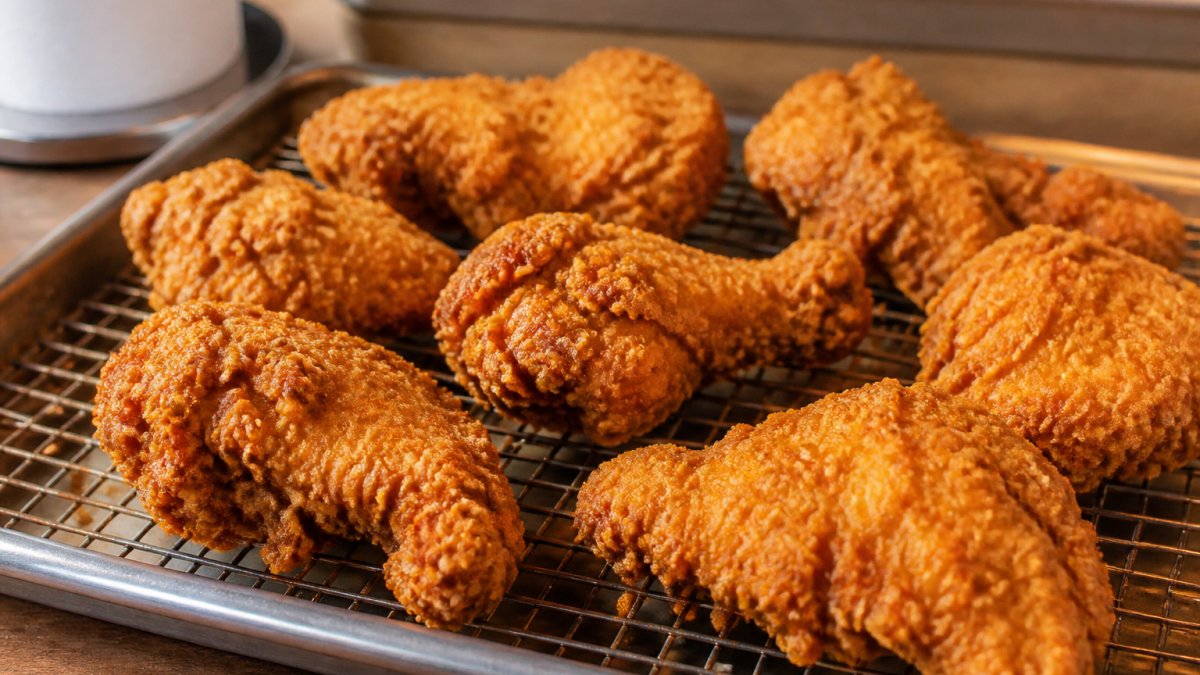
The best way to keep fried chicken warm is a 200°F oven with the chicken on a wire rack over a baking sheet.
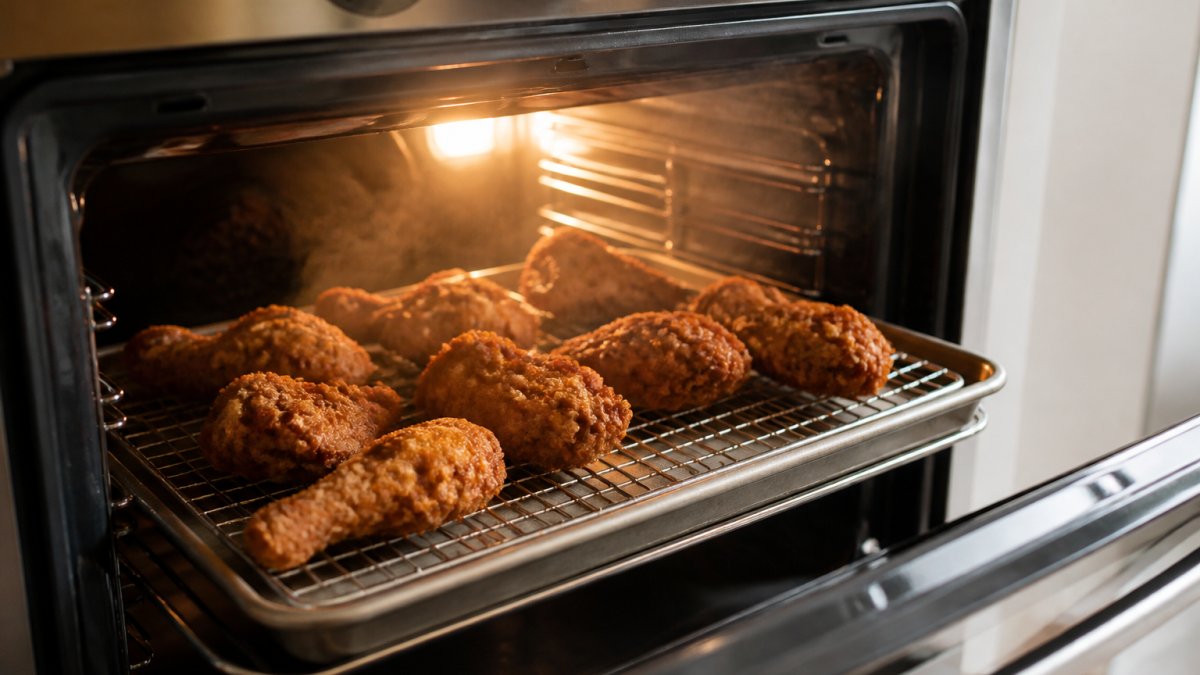
Low-Oven Holding: Temperatures and Time Limits
Set the oven to 200°F, no higher. A hotter oven keeps cooking the chicken and dries it out.
- Keep the door cracked open to release steam
- Hold for up to about 45 minutes
- Check the internal temp before serving
Aim for an internal temperature of 165°F. That is the safe minimum for poultry, per USDA food safety guidance on poultry. Past 45 minutes, the crust starts to soften even in a low oven.
How to Transport Fried Chicken Without It Getting Soggy
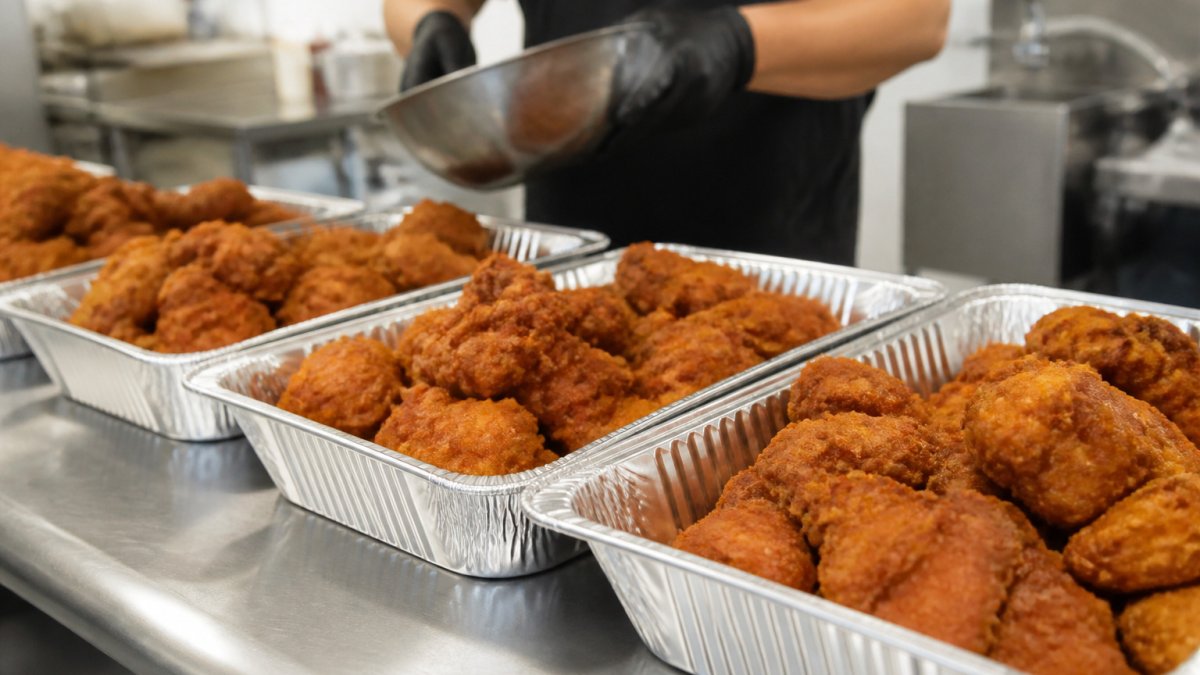
Transport fried chicken in a vented container, not a sealed one. Steam needs a way out. A closed lid turns your crunchy coating into a soggy mess before you arrive.
Packaging by Duration: 15 Minutes to 2 Hours
Match your packaging to your travel time.
- Under 15 minutes: Open basket or tray, no lid
- 15-45 minutes: Cardboard box with the lid cracked
- 45 minutes to 2 hours: Insulated bag, lid vented
Paper towels work for blotting oil, but skip them for holding. They trap steam against the crust. A wire rack or vented box beats paper every time.
How to Reheat Fried Chicken So It Stays Crispy
The oven and the air fryer are the two best ways to reheat fried chicken. Both use dry, moving heat that drives moisture off the surface and re-crisps the coating. The microwave is the worst option, because it heats the interior moisture into steam that pushes outward through the breading.
Reheating Method Comparison: Oven, Air Fryer, Skillet, Microwave
Each method trades crispness against speed and batch size. Here is how they stack up.
| Method | Temp | Time | Best For | Trade-off |
|---|---|---|---|---|
| Oven | 375°F | 15-20 min | Large batches, even re-crisp | Slowest; needs a rack or the bottom steams |
| Air fryer | 375°F | 8-12 min | 2-6 pieces, fastest crisp | Small basket; crowding steams the pieces |
| Skillet | Medium | 6-8 min | 1-3 pieces, crisp bottom | Only the contact side crisps; needs a flip and a lid-off finish |
| Microwave | High | 1-2 min | Speed only | Steams the crust; rubbery within a minute |
For the oven and air fryer, use a rack or basket so air hits all sides. Flip once halfway through. For the skillet, add a thin film of oil, press the pieces down, and finish uncovered so the top side does not steam under a lid.
Internal Temperature Targets by Method
Crispness is the texture goal; 165°F is the safety goal. Both matter when you reheat.
- Oven and air fryer: Pull the pieces when the thickest part reads 165°F. At 375°F, most pieces hit that in 12-18 minutes depending on thickness.
- Skillet: The exterior browns before the center warms, so check the internal temp rather than the crust color. If the outside is crisp but the center is under 165°F, move the pieces to a 350°F oven for 5 minutes.
- Microwave: If you must use it, cover loosely and stop at 165°F, then finish 2-3 minutes in a 400°F oven or air fryer to restore surface crunch. The microwave alone will not give you a crisp crust.
A common pattern is to reheat only what you plan to eat. Repeated reheat cycles dry the meat and weaken the coating each time.
Batch Size and Crowding
Crowding is the most common reheating mistake. Pieces touching each other trap steam at the contact points, and those spots go soft first.
- Oven: One layer, at least 1/2 inch of space between pieces. Use two sheets if needed.
- Air fryer: Fill the basket no more than halfway and shake once at the midpoint.
- Skillet: Work in batches rather than stacking; a crowded pan drops in temperature and steams instead of sears.
What About Cold Leftovers Straight From the Fridge?
Cold chicken reheats more evenly if you let it sit at room temperature for 10-15 minutes first. This is a texture step, not a safety shortcut: the two-hour rule still applies to how long the chicken sat out before refrigeration, not to this brief warm-up.
If the coating was already soft before refrigeration, reheating will not fully restore it.
Baking Powder vs. Cornstarch for Crispy Fried Chicken
Baking powder and cornstarch both help create a crispy coating, but they work in different ways.
Many cooks use a mix of both in the seasoned flour. A common approach is one part cornstarch to three or four parts flour.
The dredge matters too. A double-dredge, flour then egg wash then flour again, builds a thicker coating.
Food Safety: Holding Temperatures, Cooling, and Storage Rules
Crispness advice and food-safety advice pull in opposite directions. A vented container keeps the crust crunchy but lets heat escape; a sealed container holds heat but traps steam. The way to satisfy both is to separate the two goals by timeline: hold hot and vented for a short window, then cool fast and refrigerate.
Hot Holding: Temperature and Time
Keep hot chicken at 140°F or above (the FDA). The USDA danger zone guidance sets the range at 40°F to 140°F and the two-hour rule: never leave food in that range for more than two hours total.
A 200°F oven holds the chicken above 140°F comfortably, but the crust softens over time. Most practitioners find the practical window is about 45 minutes before the coating noticeably declines, even though the chicken stays safe longer.
- Check the internal temp of the thickest piece, not the smallest.
- Keep the oven door cracked to release steam, but re-check the internal temp every 20 minutes.
- If the internal temp drops below 140°F and the chicken has been out more than two hours total, discard it.
Cooling: The Step Most People Skip
Do not put a big pile of hot chicken straight into the fridge. A deep container of hot pieces cools slowly, and the center can sit in the danger zone for hours.
- Spread the pieces in a single layer on a wire rack or sheet pan.
- Let them cool at room temperature for no more than 30 minutes.
- Move them to the fridge once they are cool enough to handle, ideally within the two-hour window from when they left the fryer.
Cold Storage and Reheating Rules
Keep cold chicken at 40°F or below. Refrigerated leftovers are best eaten within 3-4 days. Reheat to 165°F before eating, and never reheat more than once, each cycle dries the meat and weakens the coating.
If you froze leftovers, thaw them in the fridge overnight rather than on the counter. A counter thaw can push the outer layer into the danger zone while the center is still frozen.
Troubleshooting Crispy Fried Chicken by Cause
Most sogginess has a clear cause. Find yours in the table below.
| Problem | Likely Cause | Fix |
|---|---|---|
| Limp coating | Trapped steam | Use a vented container |
| Rubbery crust | Microwaved | Reheat in oven or air fryer |
| Dry inside | Held too long | Hold under 45 minutes |
| Soft bottom | Stacked pieces | Keep one layer |
| Soggy after sauce | Sauced too early | Add sauce at serving |
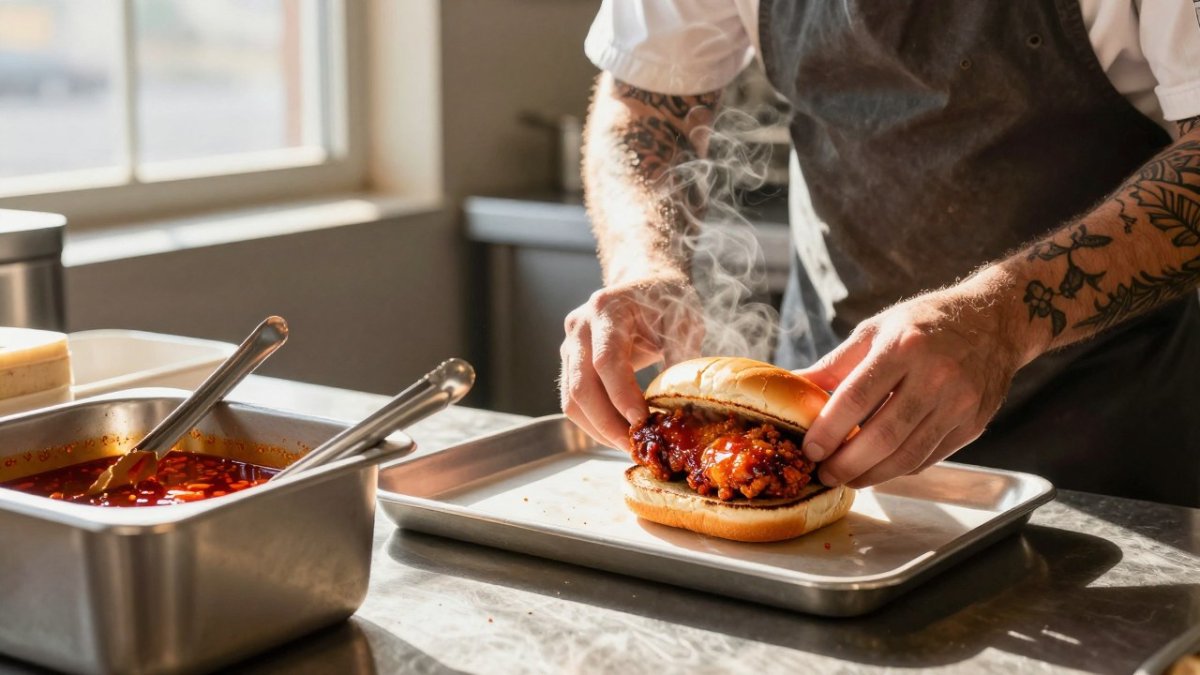
Sauce timing is the one people miss most. Lava Sauce and other wet toppings soften the crust on contact. Add sauce right before you eat, never before you store.
At Lava Hot Chicken, we serve our chicken with sauce on the side for exactly this reason.
Conclusion: Crispy Fried Chicken Every Time
Keeping fried chicken crispy comes down to controlling steam. Use a rack, vent your containers, and reheat with dry heat. Get those three right and the crunch survives the trip.
If you would rather skip the work, let us handle it. Lava Hot Chicken serves Halal-certified hot chicken with five spice levels, a signature Lava Sauce, and generous portions built for sharing.
Frequently Asked Questions
How do I keep fried chicken crispy while transporting it?
Place the chicken in a single layer on a wire rack inside a baking sheet, then cover loosely with wax paper or a vented lid. This lets steam escape instead of condensing on the breading. Avoid stacking pieces or sealing them in a tight container, which traps moisture and makes the coating soggy. For trips under 30 minutes, a cardboard box with vent holes works well. For longer trips, wrap the container in a towel to hold heat without sealing in steam.
What makes fried chicken crispier, baking powder or cornstarch?
Both help, but they work differently. Baking powder raises the pH of the coating, which speeds up browning and creates a lighter, crunchier crust. Cornstarch blocks gluten formation and dries out the surface, giving a shatteringly crisp texture. Many cooks combine a small amount of baking powder with cornstarch in the seasoned flour for the best of both. Use about 1 teaspoon of baking powder per cup of flour, and avoid overmixing to keep the coating from getting tough.
How do you reheat breaded chicken without making it soggy?
The oven and air fryer are your best bets. Set the oven to 375°F and place the chicken on a wire rack over a baking sheet. Heat for 10 to 15 minutes until the coating re-crisps and the internal temperature reaches 165°F. An air fryer at 350°F takes about 6 to 8 minutes. Avoid the microwave, which steams the breading from the inside and turns it limp. If you must use a skillet, reheat over medium heat with a tablespoon of oil to restore crunch.
Should fried chicken cool before you store it?
Yes. Let the chicken cool to room temperature for no more than 30 minutes before refrigerating. Storing it hot traps steam inside the container, which softens the crust and creates a moist environment where bacteria can grow. Once cooled, place pieces in a single layer on a paper towel-lined container, then cover loosely with wax paper before sealing. Refrigerate for up to 4 days. Reheat using a dry-heat method to bring back the crunch.
Crispy chicken is a timing game, and most people lose it before the food even leaves the kitchen. If you want the crunch without the guesswork, Lava Hot Chicken has you covered. Our Halal-certified chicken is hand-prepped and double-dredged, with five heat levels from No Spice to Fire and our signature Lava Sauce on the side. Get started with Lava Hot Chicken and enjoy hot, crispy chicken at its best.