 how-to
How to Make Mild Hot Chicken With Real Flavor
Last Updated: October 28, 2026
Quick Summary
Mild hot chicken keeps the flavor and drops the burn by swapping most of the cayenne for paprika, then adding just 1/2 tsp cayenne per batch for a warm, rounded heat with no lingering burn. Season the flour, the chicken, and the glaze so garlic, black pepper, and toasted spice lead every bite.
- Marinate thighs or breasts in buttermilk at least 4 hours; tenders need only 1 to 2 hours.
- The base dredge blend uses 2 tbsp paprika, 1 tsp each garlic powder, onion powder, black pepper, and salt.
- Double-dredge through buttermilk and seasoned flour twice, then rest the pieces 10 to 15 minutes.
- Fry at 325°F to 350°F, cooking thighs 12 to 15 minutes and breasts 10 to 12 minutes.
- Cook thighs to 175°F and breasts to 165°F, then rest 5 to 10 minutes before saucing.
Table of Contents
- Start With the Right Chicken and a Buttermilk Marinade
- Build a Hot Chicken Seasoning That Leads With Flavor
- Double-Dredge and Fry for the Crunch That Holds Up
- How to Make Hot Chicken Less Spicy Without Losing Flavor
- Nashville Hot Chicken Spice Levels, Explained
- Mix a Hot Chicken Sauce That Complements the Bird
- Order Your Heat Level at Lava Hot Chicken
- Frequently Asked Questions
Start With the Right Chicken and a Buttermilk Marinade
Mild hot chicken with flavor starts with the bird, not the chili.
Here is the core idea most recipes skip. Heat is easy to add and hard to control. Flavor is the opposite.
Choose your cut with texture in mind:
- Chicken thighs: more fat, more forgiving, stay juicy past 165°F
- Chicken breasts: leaner, need a watchful eye on cook time
- Chicken tenders or strips: fast, even cooking, great for first-timers
The buttermilk marinade does two jobs. Its acid gently tenderizes the surface, and its thickness helps the seasoned flour cling. A common mistake is skipping the marinade to save time.
Give thighs or breasts at least 4 hours in the fridge. Tenders need less, about 1 to 2 hours. Pat the pieces mostly dry before dredging, but leave a little tack. That tack is what grabs the flour.
Build a Hot Chicken Seasoning That Leads With Flavor
A good hot chicken seasoning is a flavor blend first and a heat delivery system second.
Start with this base blend for one batch of dredge (enough for about 2 pounds of chicken):
- 2 tbsp paprika (sweet or smoked)
- 1 tsp garlic powder
- 1 tsp onion powder
- 1 tsp black pepper
- 1 tsp salt
- 1/2 tsp brown sugar or honey powder for balance
- Cayenne, measured by heat level below
That cayenne measurement is the whole game. Separate the color and flavor job from the burn job in your head, and mild hot chicken stops being a compromise. Here are measured ratios for the same base blend so you can move between levels without starting over:
- No spice: 0 cayenne. All paprika, garlic, and pepper. Good for kids and anyone avoiding heat entirely.
- Mild: 1/2 tsp cayenne per batch. Warm and rounded, with no lingering burn. This is the level most first-timers should cook.
- Medium: 1 tsp cayenne per batch. A noticeable burn that builds slowly across a piece.
- Hot: 2 tsp cayenne per batch, plus a pinch of ground ghost or habanero if you want a sharper edge.
Keep notes on what you used so you can repeat it. Two or three cooks in, you will have your own reliable scale instead of guessing.
What most guides miss is layering. The USDA food safety guidance on poultry preparation is worth a read before you start handling raw chicken.
When you cut cayenne, you have to put flavor back somewhere or the chicken tastes flat. These are the workhorses:
- Paprika: carries color and a sweet, earthy backbone. Smoked paprika adds a campfire note that reads as depth, not heat.
- Garlic and onion powder: savory base notes that make the coating taste seasoned rather than merely spicy.
- Brown sugar or honey powder: rounds the edges of black pepper and paprika the way barbecue rubs do.
- Mustard powder: a small amount (1/4 tsp) adds a tangy back note that mimics the sharpness heat usually provides.
- Black pepper: the most underrated heat source in mild chicken. Fresh-cracked pepper gives a slow, warm tingle without cayenne's sharpness.
A common pattern is to taste the dry blend on a spoon before it touches chicken.
Paprika carries the color and the sweet, earthy backbone. Cayenne carries the burn. Mustard powder and black pepper carry the tang and the slow warmth. Give each one a job and the mild version tastes deliberate instead of dialed back.
Double-Dredge and Fry for the Crunch That Holds Up
Double-dredging is the difference between coating that stays put and coating that falls off.
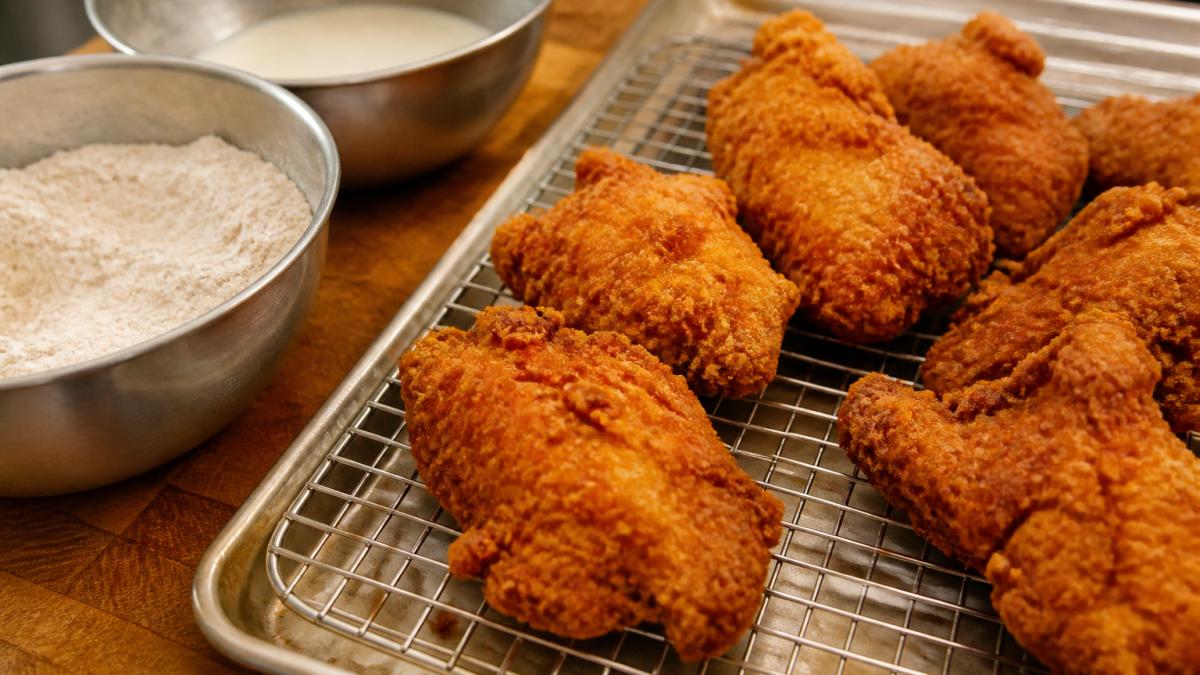
Press the flour in with your fingers on the second pass. You want visible ridges and flakes, not a smooth jacket.
Most recipes stop at the fryer. If you want crisp chicken with less oil, the same double-dredge works in an oven or an air fryer.
Oven-baked method:
- Set a wire rack inside a sheet pan and preheat the oven to 400°F.
- Spray or brush the rack lightly with oil so the coating does not stick.
- Arrange the dredged pieces in a single layer with space between them.
- Bake 35 to 45 minutes for thighs, 25 to 30 minutes for breasts, turning once halfway through.
- For extra crunch, raise the heat to 425°F for the last 5 minutes.
Air-fryer method:
- Preheat the air fryer to 375°F for 3 to 5 minutes.
- Lightly spray the basket and the chicken with oil. Do not skip this; air fryers need a little fat to brown the coating.
- Cook thighs 22 to 28 minutes, breasts 18 to 22 minutes, and tenders 10 to 12 minutes, flipping once at the halfway mark.
- Work in batches so the pieces are not touching. Crowding steams the coating instead of crisping it.
Deep-fry method:
- Hold the oil around 325°F to 350°F. Too cool and the breading drinks oil. Too hot and the outside burns before the inside cooks. A clip-on thermometer takes the guesswork out.
- Fry in small batches. Crowding the pot drops the oil temperature fast.
- Cook thighs about 12 to 15 minutes and breasts about 10 to 12 minutes, turning once.
Whichever method you use, doneness is the same test. The USDA safe minimum internal temperature chart lists poultry at 165°F, and thighs actually improve a few degrees past that because the extra fat renders and the meat gets more tender.
Let the chicken rest on a wire rack for 5 to 10 minutes before saucing or serving. Resting lets the juices redistribute so they do not run out on the first bite, and it gives the coating a moment to firm up. Sauce after the rest, not before, or the crust softens.
A common pattern among home cooks is to pull chicken the moment it hits temperature and cut in right away.
How to Make Hot Chicken Less Spicy Without Losing Flavor
Try these moves, in order of impact:
- Cut the cayenne, keep the paprika. You lose burn, not color or depth.
- Add a cooling sauce. Ranch or a yogurt-based drizzle tames heat on contact.
- Lean on acid. A squeeze of lemon or a splash of vinegar brightens the whole bite.
- Bring in sweetness. A honey or brown sugar glaze balances chili heat the way barbecue sauce does.
A reader who wants the flavor but not the fire can order ranch on the side to cool each bite without changing the recipe.
Buttermilk itself is a quiet heat softener. The dairy coats your palate and mutes the sharp edge of cayenne.
If you are cooking for a mixed table, fry one mild batch and one hot batch, then let people sauce their own.
Nashville Hot Chicken Spice Levels, Explained
Think of it in tiers:
- No spice: seasoned and fried, zero cayenne, all flavor
- Mild: a whisper of cayenne, warm but painless
- Medium: noticeable burn that builds slowly
- Hot: sharp, immediate heat
- Extreme: the chili-head zone, built for people who want the challenge
The Dave's Hot Chicken spice level breakdown pegs one restaurant's mild tier in the low thousands on the Scoville scale, which shows how wide "mild" can be from kitchen to kitchen.
Here is the practical takeaway. Mild is not the absence of flavor. It is a deliberate heat setting that keeps the paprika, garlic, and black pepper front and center.
For anyone building a plate at home, write your cayenne amount on the recipe card next to the level it produced.
Here is the ladder of heat levels, from no cayenne to extreme.
| Level | Cayenne per batch | What to expect |
|---|---|---|
| No spice | 0 cayenne | All paprika, garlic, and pepper |
| Mild | 1/2 tsp cayenne | Warm and rounded, no lingering burn |
| Medium | 1 tsp cayenne | Noticeable burn that builds slowly |
| Hot | 2 tsp cayenne | Sharp, immediate heat |
| Extreme | Chili-head zone | Built for people who want the challenge |
Mix a Hot Chicken Sauce That Complements the Bird
A hot chicken sauce should lift the chicken, not bury it.
Build one with this framework:
- Fat base: melted butter or a neutral oil to carry the spices
- Heat: cayenne or chili flakes, measured to your level
- Sweet: honey or brown sugar to round the edges
- Acid: a splash of vinegar to cut the richness
- Aromatics: garlic powder, paprika, a pinch of salt
Whisk it warm so everything emulsifies, then brush it on the chicken right out of the fryer. The heat helps the sauce soak into the craggy coating.
If you want to taste a finished version before building your own, you can use a sauce as a benchmark for balance.
What most people get wrong is treating sauce as the heat source.
Order Your Heat Level at Lava Hot Chicken
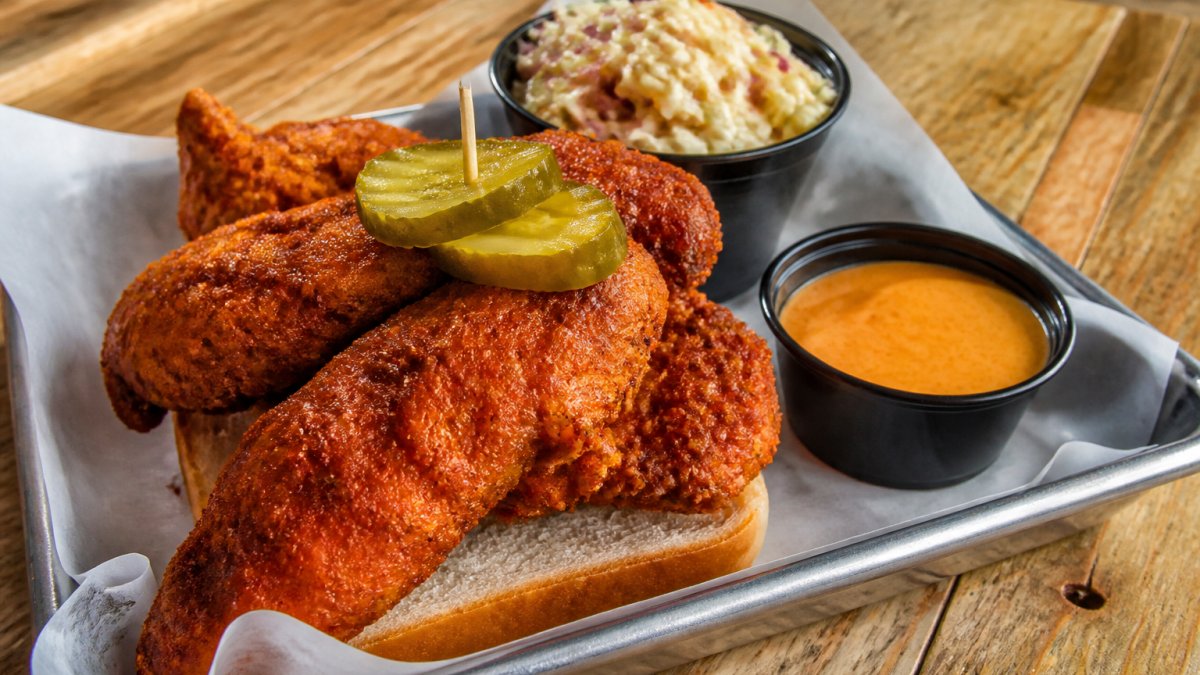
At Lava Hot Chicken, our five spice levels run from No Spice to Fire. Try the chicken in Slider form with pickles, slaw, and Lava Sauce. Our hand-prepped, double-dredged chicken is Halal-certified and paired with signature Lava Sauce and crinkle-cut fries.
Our chicken is Halal-certified, hand-prepped, and double-dredged. You can order Lava Chunks W/ Fries for a signature heat-level dish.
Mild does not mean boring here. It means the flavor gets to show up first.
Frequently Asked Questions
Is mild hot chicken still spicy?
It can be, but it does not have to be. Mild hot chicken usually lands in a low, warm range rather than a burn, so you taste cayenne and paprika without the sting that makes you reach for milk. The heat depends on how much cayenne goes into the seasoning and the sauce. A mild version should still carry salt, garlic, and a little sweetness so the chicken tastes seasoned, not just toned down.
What spices give hot chicken flavor besides heat?
Paprika, garlic powder, black pepper, and brown sugar do most of the work. Paprika adds color and a rounded, slightly sweet depth, garlic powder fills out the savory base, and black pepper gives a different kind of bite than chili. A small amount of brown sugar or honey balances the cayenne so the heat reads as part of the flavor instead of sitting on top of it. Salt matters most of all, since under-salted breading makes everything else taste flat.
How do you make Nashville hot chicken milder?
Cut the cayenne in the hot oil or sauce, not the seasoning in the breading. Keep the seasoned flour and buttermilk marinade at full strength so the chicken stays flavorful, then whisk less cayenne into the warm oil or sauce you brush on at the end. Swapping a portion of cayenne for paprika keeps the color and depth. Serving the sauce on the side lets each person control their own heat level at the table.
What sauce goes well with mild hot chicken?
A sauce built on butter or beef tallow with garlic, paprika, and a modest amount of cayenne works well because it coats the crust without soaking it. Adding honey gives a sweet and spicy balance that suits mild heat. For dipping, ranch and slaw cut richness and cool the palate. Keep the sauce warm when you brush it on so it spreads thin and keeps the breading crisp instead of turning it soggy.
Mild hot chicken with real flavor is a balance of good chicken, a layered seasoning, a crunchy double-dredge, and a sauce that complements instead of covers. If you would rather taste the finished result than build it from scratch, Lava Hot Chicken has five heat levels, Halal-certified chicken, signature Lava Sauce, and generous portions waiting at our Rowlett and Plano locations. Get started with Lava Hot Chicken and find your level, from No Spice to Fire.