 how-to
Peanut Allergy & Fried Chicken: Fryer Safety Guide
Table of Contents
- Why Fryer Safety Matters for Peanut Allergies
- Refined Peanut Oil Allergy: What the Evidence Says
- Shared Fryer Cross-Contact Allergy: How Oil Carries Risk
- Restaurant Peanut Allergy Questions That Get Real Answers
- Your Food Allergy Restaurant Script: What to Say and When
- How to Check Fried Chicken Preparation and Cooking Oil
- What to Do After an Accidental Peanut Exposure
- Conclusion
- Frequently Asked Questions
Last Updated: October 18, 2026
Why Fryer Safety Matters for Peanut Allergies
If you carry epinephrine and love fried chicken, the fryer is the question you can't stop asking. Peanut allergy fried chicken fryer safety comes down to one hard truth: hot oil moves between baskets, batches, and every food dropped into it all night.
The answer isn't a clean yes or no. It depends on the oil, the kitchen, and how staff handle the fryer between orders. Here's what to ask, what to check, and what to do if something goes wrong.
Refined Peanut Oil Allergy: What the Evidence Says
Refined peanut oil is highly processed, and the protein that triggers reactions is largely removed.
Here is the catch most guides skip. "Refined" is a manufacturing claim, not a restaurant guarantee. A kitchen may use a blend, or may not know which type it buys.
| Oil Type | Protein Level | General Guidance |
|---|---|---|
| Highly refined peanut oil | Very low | Often tolerated, confirm with your allergist |
| Unrefined or cold-pressed | Higher | Avoid if you have peanut allergy |
| Blended frying oil | Unknown | Treat as risky until verified |
Talk to your board-certified allergist before you test any oil in a restaurant. Their guidance beats anything you read online, including this page.
Shared Fryer Cross-Contact Allergy: How Oil Carries Risk
Shared fryer cross-contact allergy is the biggest risk in fried chicken, and it has almost nothing to do with the oil itself. It's about what else goes into that oil, and what the oil then carries onto your food.
The four transfer pathways in a shared fryer
Peanut protein does not need to be an ingredient in the chicken to end up on it. In a working kitchen, allergen moves through at least four routes:
- Batter and breading shed. Every breaded piece loses coating the moment it hits hot oil. Those crumbs stay suspended, settle into the vat, and get scooped up by the next basket. If any coated item contains peanut flour, crushed nuts, or a peanut-based sauce, that protein is now in the bath.
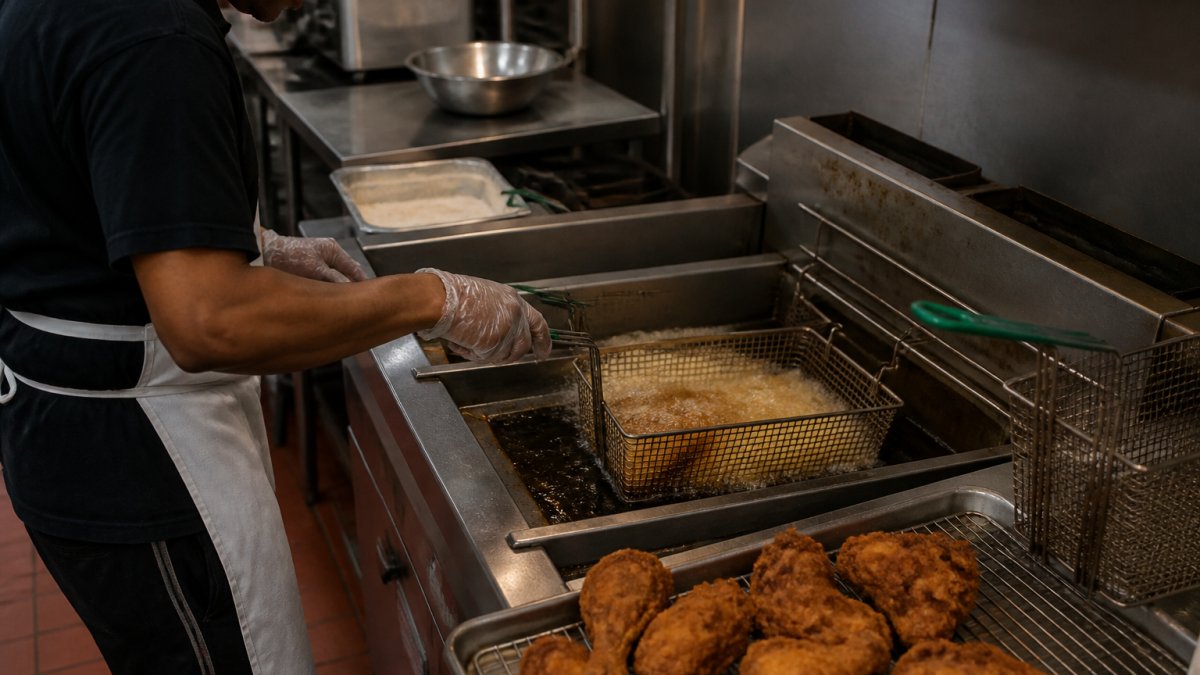
- Shared baskets and utensils. A basket that held a peanut-breaded item can leave residue on the next order. The same applies to tongs, skimmers, and strainers that move between fryers or between items.
- Oil filtration and reuse. Many kitchens filter and reuse frying oil across a service or several days. Filtration removes crumbs but not dissolved or finely dispersed protein, so reused oil carries allergen from earlier batches into later ones, and the longer it's reused, the more protein accumulates.
- Splash and drip. Oil splatter, dripping baskets, and shared drain stations can move allergen onto food that never entered the fryer at all, including fries, sides, or a plain piece of chicken sitting under a dripping basket.
Cross-contact is not cross-contamination
Cross-contact is not the same as bacterial cross-contamination. You cannot cook peanut protein out of oil, heat does not destroy the allergen. A fryer at 350°F or higher is still a risk if peanut protein is in the bath, because the protein is a structural allergen that survives normal cooking temperatures. "It's fried hot, so it's fine" is not a safety argument.
Why "what oil do you use?" is the wrong first question
A common mistake is asking only "what oil do you fry in?" A kitchen can fry in highly refined peanut oil, soybean oil, or beef tallow and still put peanut protein on your chicken through the batter, the basket, or the shared vat.
Ask what foods share the fryer, whether anything with nuts or peanut butter ever goes in, and how the oil is filtered and reused. Those three answers tell you more than the oil label alone.
How to verify what a kitchen actually does
Staff descriptions and kitchen reality often diverge, especially at peak hours. Close the gap:
- Ask the person who runs the fryer, not just the server. Line cooks and fryer operators know the traffic pattern; front-of-house staff often repeat a script.
- Ask for a specific, closed-ended answer. "Does anything with peanut, peanut butter, or peanut flour go into the fryer that cooks the chicken?" is answerable. "Is it safe?" is not.
- Ask about separate baskets and dedicated vats. A dedicated fryer for chicken, or a separate vat for fries, materially changes the risk. A shared basket does not.
Restaurant Peanut Allergy Questions That Get Real Answers
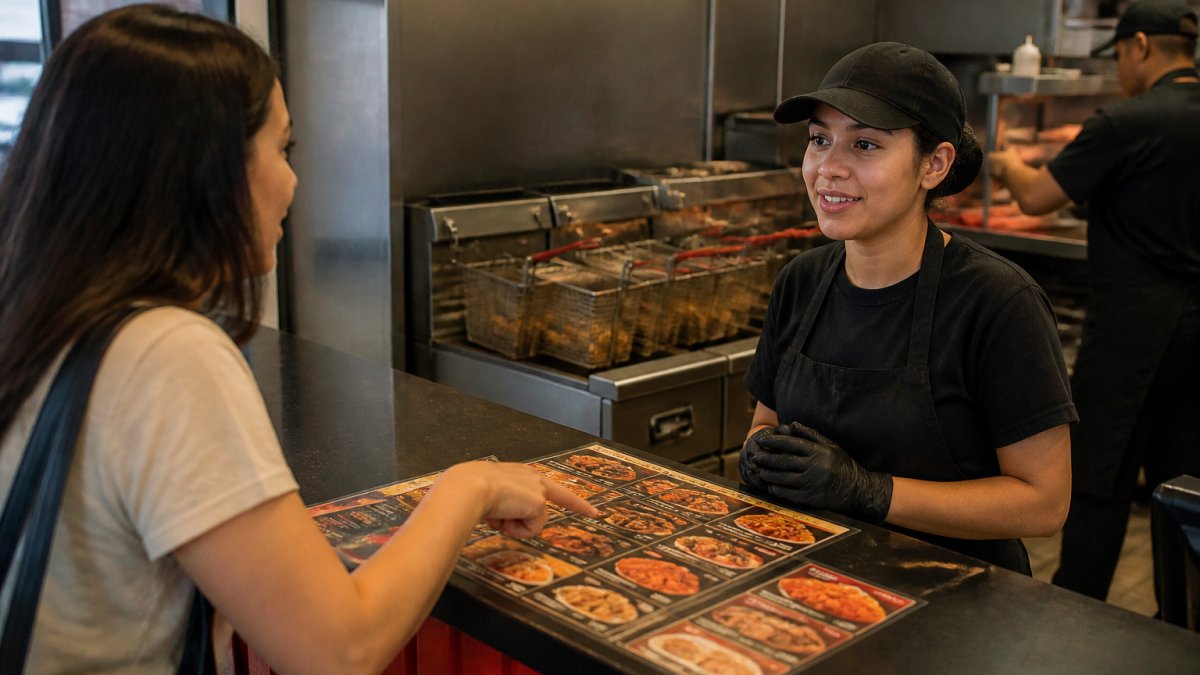
Restaurant peanut allergy questions work best when they're specific and closed-ended. "Is this safe?" invites a guess. "Which fryer cooks the chicken, and what else goes in it?" forces a real answer.
Here are the questions that get useful answers:
- What exact oil do you fry in, and can I see the label?
- Is there a dedicated fryer for chicken, or does everything share one?
- Does anything with peanuts, peanut butter, or peanut oil enter that fryer?
If staff seem unsure, that is your answer. Uncertainty is a reason to skip the item, not a reason to hope.
Your Food Allergy Restaurant Script: What to Say and When
A food allergy restaurant script removes the guesswork and keeps you calm. Say it at the counter before you order, and again to the server who takes your food.
Try this:
"I have a peanut allergy. I want the fried chicken, but I need to know three things: what oil the fryer uses, whether anything with peanuts goes in that same fryer, and whether the chicken shares a basket with other fried items. If staff can't confirm all three, I'll order something else."
That script does two things. It tells staff this is serious, and it gives them a checklist instead of a vague worry. If the answers are shaky, order a non-fried item or walk.
How to Check Fried Chicken Preparation and Cooking Oil
Checking fried chicken preparation starts with the batter and ends with the oil.
Then watch the fryer itself for a minute. Do they drop everything in one basket? Filter oil between batches? Keep a separate fryer for fries?
At home, the same rules apply. If you fry your own chicken, use a dedicated fryer or fresh oil, clean the basket and vat well, and never reuse oil that touched peanut products.
Use this checklist:
- Confirm the oil type and ask to see the label
- Ask whether a dedicated fryer exists for chicken
- Confirm nothing peanut-based enters that fryer
What to Do After an Accidental Peanut Exposure
Act fast and follow your allergy action plan. If you have trouble breathing, throat swelling, faintness, or widespread hives, use your epinephrine auto-injector and call 911 right away. Don't wait to see if it passes, and don't drive yourself.
The longer version matters because reactions after a fried-chicken meal can unfold over minutes to hours, and the decisions you make in the first few minutes shape the outcome.
Recognize the symptoms that mean epinephrine now
Anaphylaxis is a whole-body reaction, and it does not always look like the movies. Use epinephrine and call 911 if you have any of the following after eating:
- Breathing problems, wheezing, chest tightness, shortness of breath, or a feeling that the throat is closing.
- Throat or mouth swelling, trouble swallowing, a hoarse voice, or a swollen tongue or lips.
- Circulation signs, faintness, dizziness, pale or clammy skin, a sudden drop in energy, or a sense of impending doom.
Epinephrine is the first-line treatment for anaphylaxis, with no contraindication in a suspected severe reaction. Delaying it to see whether symptoms improve is associated with worse outcomes. If in doubt, use it, the risks of an unnecessary dose are far lower than those of a delayed one.
What to do in the first minutes
- Stop eating immediately and tell the people with you that you are having a reaction.
- Use your epinephrine auto-injector as prescribed, into the outer thigh. Note the time.
- Call 911 and say "anaphylaxis" and "epinephrine has been given." Do not drive yourself or have someone drive you.
- Lie down with your legs elevated if you feel faint, or sit up if breathing is difficult. Do not stand or walk around.
- Tell restaurant staff so they can stop serving the item and preserve the plate and packaging if possible.
- Keep the used auto-injector and bring it with you, emergency responders and your allergist will want to know what was given and when.
Milder symptoms still deserve attention
Milder symptoms like a few hives or an itchy mouth still deserve attention. Stop eating, tell staff, and take your medicine as directed. Watch for worsening symptoms: a mild reaction can progress over 30 to 60 minutes, and a biphasic reaction, a second wave, can occur hours after the first symptoms resolve, sometimes without a second exposure. That's why emergency care and follow-up matter even when the first wave seems to settle.
After the reaction: document and follow up
After any reaction, follow up with your allergist and report what happened so your plan can be updated. Bring specifics:
- What you ate, where, and the time of the meal.
- The time symptoms started and what they were.
- Whether and when epinephrine was used, and the dose.
That record helps your allergist judge whether your action plan, epinephrine prescription, or restaurant approach needs to change, and gives you a concrete story to compare against future meals.
Conclusion
Eating fried chicken with a peanut allergy isn't impossible, but it demands real questions and honest answers. The oil type matters, the shared fryer matters more, and staff who can confirm both are the only green light you should trust.
At Lava Hot Chicken, we fry in beef tallow in a kitchen built for guests who ask exactly these questions, with Halal-certified chicken and five spice levels from No Spice to Fire. Check our food allergy guidance resources, then come see us in Rowlett or Plano and order with confidence.
Frequently Asked Questions
Can someone with a peanut allergy eat fried chicken cooked in peanut oil?
It depends on the oil and the fryer. Highly refined peanut oil has most peanut protein removed, and some allergists consider it lower risk for many peanut-allergic people. Unrefined or cold-pressed peanut oil still contains peanut protein and should be avoided. Even with refined oil, shared fryers used for breaded or peanut-containing foods can introduce cross-contact. Ask the restaurant which oil they use and whether the fryer is dedicated, then confirm with your allergist before eating.
Is refined peanut oil safe for people with peanut allergies?
Refined peanut oil goes through processing that removes most of the protein responsible for reactions, and research suggests many peanut-allergic people tolerate it. That does not make it risk-free for everyone. Reactions vary by person, and a severe allergy warrants a conversation with your allergist before trying it. Also confirm the oil is truly refined, not a cold-pressed or unrefined version, and ask whether the same fryer handles breaded chicken or peanut-containing items that can leave protein behind.
Can peanut proteins remain in a shared fryer?
Yes. Frying oil does not destroy peanut protein, and food particles, batter, and breading can stay in the oil or on fryer baskets between batches. If a shared fryer cooks peanut-containing items or breaded chicken with peanut ingredients, later batches can pick up trace protein. Cross-contact risk rises with oil reuse and busy kitchens. A dedicated fryer or one that never handles peanut items is the safer choice, and staff should confirm this before you order.
What should I ask a restaurant about its fryer oil and cross-contact?
Ask which oil the fryer uses (refined or unrefined peanut oil, or another oil), whether the fryer is dedicated or shared, and whether breaded chicken or peanut-containing foods go into the same oil. Ask if fryer baskets and utensils are separate and whether oil is reused across menu items. Request that staff check ingredient labels for the batter and breading. If answers are vague or staff seem unsure, treat that as a caution sign and choose a different option.