 blog
Nashville Hot Chicken vs Buffalo Wings: Which Is Hotter?
Table of Contents
- Nashville Hot Chicken vs Buffalo Wings: The Core Differences
- What Is Nashville Hot Chicken Flavor?
- What Is Buffalo Wings Flavor?
- Nashville Hot Chicken Heat Level vs Buffalo Wing Heat
- Nashville Hot Chicken Wings Recipe: What Goes Into It
- Nashville Hot Chicken vs Buffalo Wings: Side-by-Side Comparison
- Frequently Asked Questions
Last Updated: October 14, 2026
Nashville Hot Chicken vs Buffalo Wings: The Core Differences
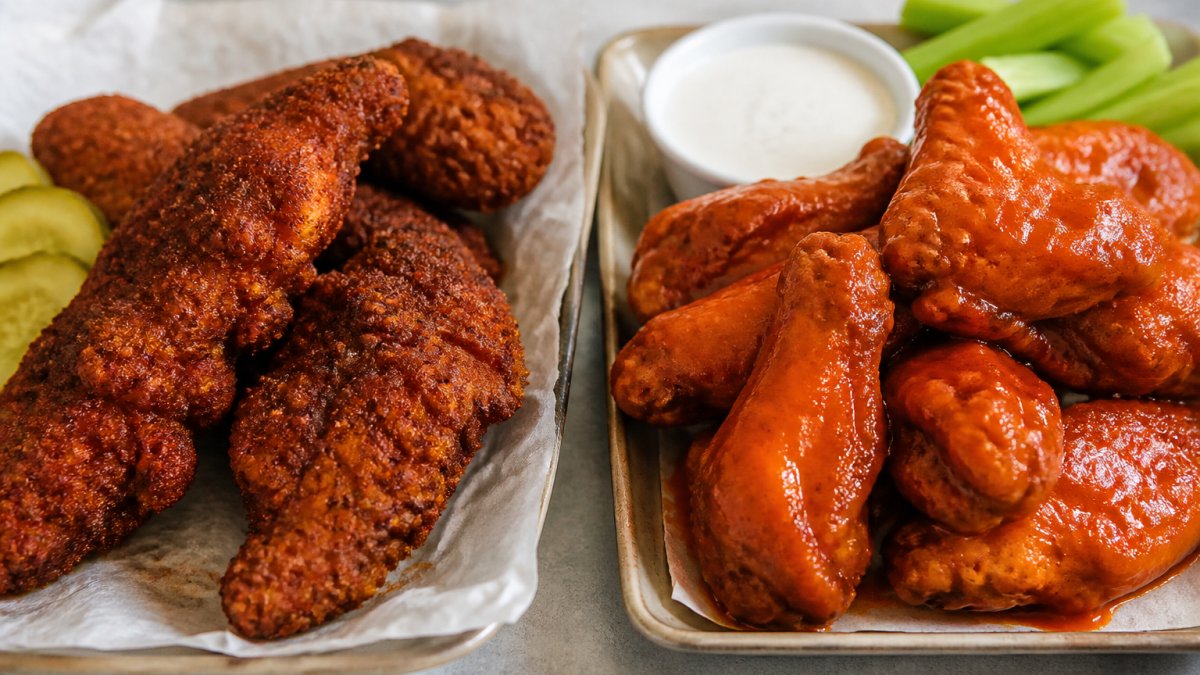
Nashville hot chicken vs buffalo wings comes down to one split: Nashville hot chicken is fried chicken coated in spiced oil, while Buffalo wings are fried wings tossed in a butter-and-hot-sauce blend.
The heat works differently, too. Buffalo heat is bright and tangy, cut by butter. Nashville heat is deeper and more savory, carried by oil that soaks into the crust.
Sauce vs Seasoned Oil: How Each Gets Its Heat
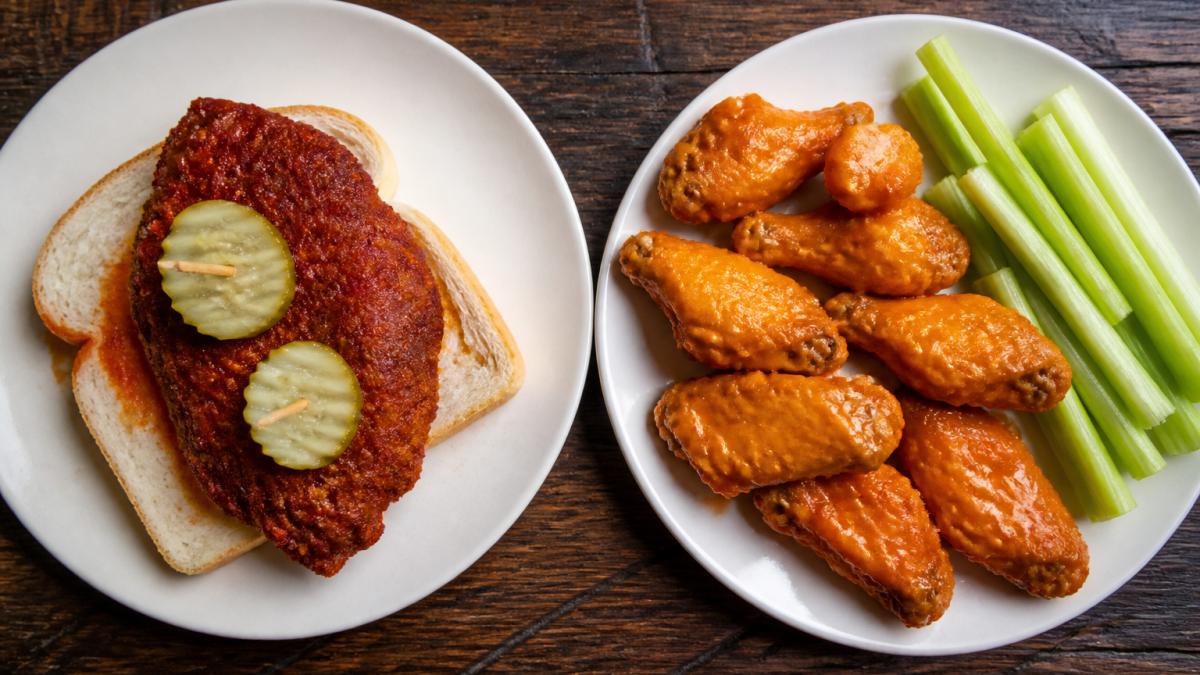
Buffalo wings get their heat from a sauce applied after frying: hot sauce, melted butter, and a touch of vinegar or Worcestershire, which is why they taste tangy and rich rather than purely spicy. Nashville hot chicken gets its heat from seasoned oil: cayenne, chili powder, brown sugar, and other spices whisked into hot frying oil or lard, then ladled over the finished chicken. A sauce sits on the surface; seasoned oil penetrates.
What Is Nashville Hot Chicken Flavor?
Nashville hot chicken flavor is built on cayenne pepper, brown sugar, and a supporting cast of chili powder, garlic powder, and sometimes smoked paprika. The sugar balances the burn and helps the spice blend cling to the crust.
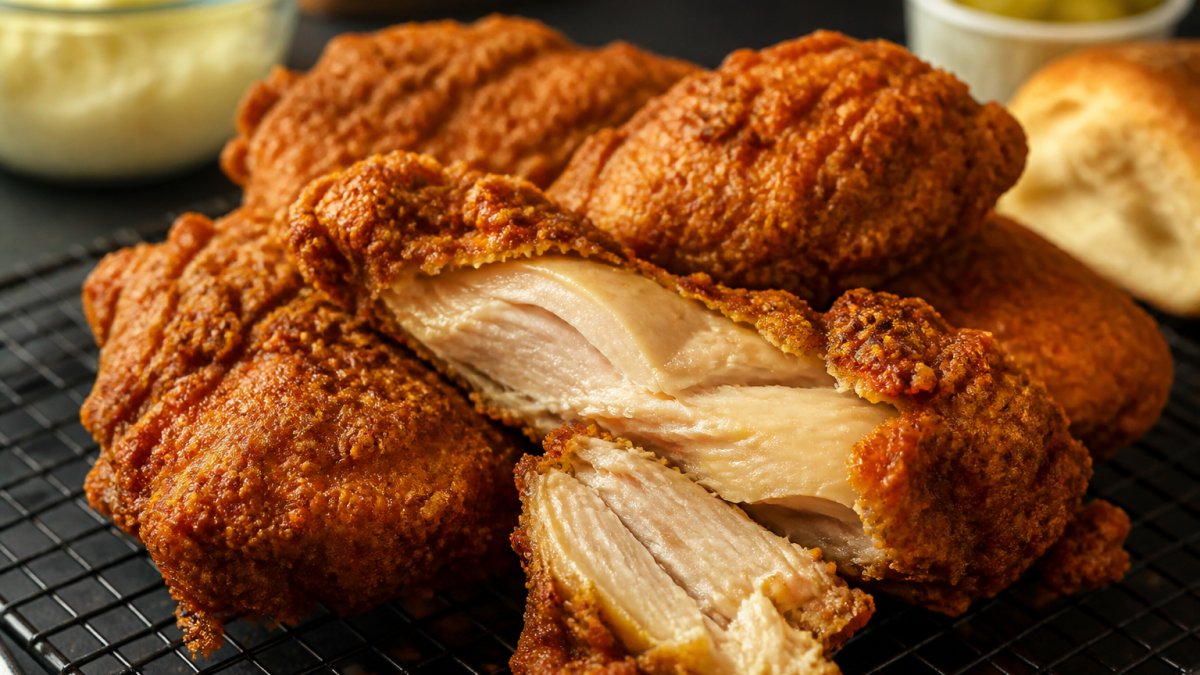
The flavor is savory, slightly sweet, and deeply spicy, fried chicken first, heat second, with crunchy breading, rich oil, and a slow-building burn. Authentic preparation means a double-dredge in seasoned flour, a fry in hot oil, and a finish in the spiced oil blend.
What Is Buffalo Wings Flavor?
Buffalo wings flavor is tangy, buttery, and sharp, with vinegar-forward heat rather than a deep spice blend. The sauce is simple: cayenne-based hot sauce, butter, and often a splash of vinegar.
That simplicity is the strength: Buffalo sauce works on wings, sandwiches, and anything fried, and the butter makes the heat smoother than Nashville's. Traditional serving includes celery sticks and a cold dip, usually blue cheese or ranch; the celery resets your palate while the dairy cools the burn.
The trade-off: Buffalo wings can taste one-dimensional next to Nashville hot chicken. If you want complexity, Nashville wins; if you want crowd-pleasing heat nearly everyone can handle, Buffalo is safer.
Nashville Hot Chicken Heat Level vs Buffalo Wing Heat
Nashville hot chicken heat level and Buffalo wing heat are often compared as if one is simply hotter, but the two use different heat carriers, a "medium" at one kitchen can land hotter than a "hot" at another.
Neither style is universally hotter. Heat depends on the recipe, the tier you order, and how much sauce or oil reaches your food. What you can compare is how the heat behaves.
How the Heat Actually Reaches Your Tongue
Buffalo sauce is an emulsion of cayenne-based hot sauce and butter. The butter coats your tongue and lips, slowing capsaicin from binding to pain receptors, so the burn reads as quick front-of-mouth heat that fades in a minute or two. Nashville spiced oil is a fat-based infusion of cayenne, chili powder, brown sugar, and other spices whisked into hot frying oil or lard; fat carries capsaicin efficiently and clings to the crust, so the burn builds over the first few bites and lingers longer.
Comparable Heat Guidance by Tier
Most kitchens that serve either style offer tiers. Here's a rough way to line them up:
| Menu tier | Buffalo wing (typical) | Nashville hot (typical) |
|---|---|---|
| Mild / No spice | Buttered hot sauce, barely any burn | Plain fried, no spiced oil |
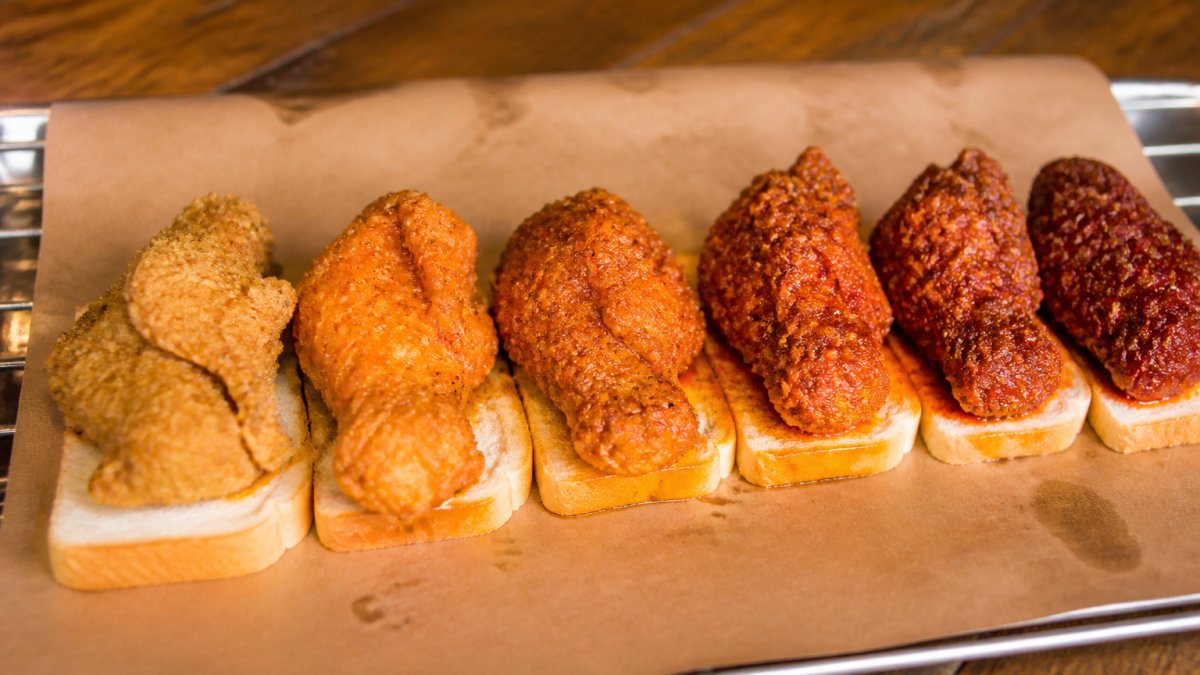
| Medium | Standard Buffalo sauce | Light cayenne oil, noticeable warmth |
| Hot | Extra cayenne or added ghost/ habanero | Heavy cayenne oil, strong lingering burn |
| Extra hot / Fire | Often uses extract or superhot mash | Often uses superhot powder in the oil |
A useful rule of thumb: a mid-tier Nashville hot usually lands closer to a "hot" Buffalo wing than a "medium" one, because the oil penetrates the crust instead of sitting on top. But this flips at the top end, where some Buffalo sauces use capsaicin extract and can outrun a Nashville tier built on whole dried chiles.
Why the Scoville Scale Doesn't Settle It
The Scoville scale measures capsaicin in a pepper or sauce, not a finished plate. Cayenne sits around 30,000 to 50,000 Scoville Heat Units, and a typical Buffalo sauce lands well below that once butter and vinegar dilute it. Nashville spiced oil uses the same pepper but concentrates the powder into fat, so the per-bite load can be higher.
What the scale can't capture: how much sauce or oil you actually get, whether the kitchen drains the fryer oil before ladling, and how your tolerance responds to fat-based versus vinegar-based heat.
Customization and Cooling
Buffalo wings are usually fixed once tossed, you can ask for sauce on the side, but the batch is already blended. Nashville hot chicken is more adjustable by tier.
Cooling strategies differ too. Buffalo wings come with celery and blue cheese or ranch, and the dairy fat does real work against capsaicin. If you're heat-averse, order ranch either way.
A Practical Way to Choose
If you want a burn you can pace and stop, Buffalo wings are easier to manage because the heat sits on the surface. If you want a burn that builds and stays through the meal, go Nashville. For a group with mixed tolerance, ask for sauce or oil on the side.
Nashville Hot Chicken Wings Recipe: What Goes Into It
Nashville hot chicken wings recipe starts with a double-dredge in seasoned flour, a fry until golden, then a toss or ladle of spiced oil made from cayenne, chili powder, brown sugar, and hot frying oil. The wing version keeps the flavor and swaps the bone-in breast for easier-to-handle pieces.
The Ingredient Breakdown, Side by Side
Nashville spiced oil (the coating):
- Cayenne pepper, the primary heat source, typically 1 to 3 tablespoons per batch
- Brown sugar, balances the burn and helps the spice blend cling to the crust
- Chili powder, garlic powder, smoked paprika, supporting savory notes
- Hot frying oil or lard, the carrier that turns dry spice into a pourable coating
- Optional: a drizzle of honey for contrast, or a splash of pickle brine for acid
Buffalo sauce (the coating):
- Cayenne-based hot sauce, the heat and vinegar backbone
- Melted butter, rounds the edges and helps the sauce cling
- Vinegar or Worcestershire, sharpens the tang
- Optional: garlic powder, honey, or a squeeze of lemon
The structural difference: Nashville's coating is a spiced fat, Buffalo's is an emulsified sauce. Fat-based coatings soak into breading; emulsified sauces sit on top, which drives most of the texture and heat differences.
Step-by-Step Nashville Hot Wing Preparation
- Brine or marinate the wings for juiciness, often in buttermilk or a seasoned salt solution. A 4- to 12-hour brine is common; longer than 24 hours can make the meat mushy.
- Double-dredge in flour mixed with cayenne, paprika, garlic powder, and salt. The first coat adheres to the wet wing; the second builds the crust that survives the oil.
- Rest the dredged wings for 10 to 15 minutes before frying. This lets the flour hydrate and prevents the breading from sliding off.
- Fry at a steady 350°F to 375°F until the crust is deep golden and the internal temperature hits 165°F. Fry in batches so the oil temperature doesn't drop.
- Build the spiced oil by whisking cayenne, chili powder, brown sugar, and a little hot frying oil together. The oil should be hot enough to bloom the spices but not so hot it burns the sugar.
- Coat the wings with the oil, by tossing or ladling, right before serving. Ladling gives more control; tossing gives more even coverage.
- Plate over bread with pickles to catch the oil and add acid.
How This Differs From a Buffalo Wing Recipe
Buffalo wings usually skip the flour dredge entirely. The wings are fried bare (or lightly dusted with baking powder), then tossed in hot sauce, butter, and vinegar. With no breading to soak up the coating, the sauce stays on the skin and the heat hits immediately.
If you want to convert a Buffalo recipe to Nashville style, you can't just swap the sauce. The breading is what makes the spiced oil work. Without it, the oil slides off and you get greasy wings with uneven heat.
Nutrition and Dietary Considerations
Exact numbers vary by recipe and portion, but the general pattern is worth knowing:
- Calories: Nashville hot wings typically run higher per wing because of the flour breading, which absorbs frying oil. Buffalo wings, being unbreaded, usually land lower per wing before the sauce is counted.
- Sodium: Buffalo sauce is vinegar- and salt-forward, so it often contributes more sodium per serving than a Nashville spiced oil, which relies on dry spices and sugar.
- Fat: Both are fried, so both are fat-dense. Buffalo adds butter on top of frying oil; Nashville adds spiced oil on top of frying oil. The fat sources differ but the totals are often similar.
- Sugar: Nashville spiced oil usually contains brown sugar, so it carries more added sugar than a traditional Buffalo sauce.
- Gluten: Nashville hot chicken is breaded, so it contains wheat unless the kitchen uses a gluten-free flour blend. Buffalo wings are typically gluten-free if the sauce and any dusting are.
These are patterns, not promises, a kitchen that ladles heavy oil or doubles the butter can flip any comparison.
Nashville Hot Chicken vs Buffalo Wings: Side-by-Side Comparison
Nashville hot chicken vs Buffalo wings is a choice between deep, lingering spice and bright, tangy heat.
If you love a slow-building, savory burn, go Nashville.
| Category | Nashville Hot Chicken | Buffalo Wings |
|---|---|---|
| Origin | Southern regional specialty | Buffalo, New York bar food |
| Breading | Breaded, double-dredged | Typically unbreaded |
| Heat delivery | Seasoned oil, ladled | Sauce, tossed |
| Flavor notes | Savory, sweet, complex | Tangy, buttery, sharp |
| Texture | Thick, crunchy crust | Crisp skin, saucy |
| Serving style | Over bread, with pickles | With celery and dip |
| Best for | Spice lovers chasing depth | Crowds and casual snacking |
Pros of Nashville hot chicken: deeper flavor, lingering heat, satisfying crunch, and a customizable spice ladder at good kitchens.
Cons: the heat can overwhelm if you're not ready, and a rushed oil application ruins the crust.
Pros of Buffalo wings: approachable heat, tangy flavor, easy to share, and reliable almost anywhere.
Cons: less complex, and the sauce can make the skin soggy if they sit too long.
The real challenge with hot chicken is finding a kitchen that respects both the heat and the flavor.
Frequently Asked Questions
Which is hotter, Nashville hot chicken or Buffalo wings?
Nashville hot chicken is generally hotter. Its heat comes from a seasoned oil or paste made with cayenne pepper and chili powder, applied directly to the fried chicken after cooking. Buffalo wings get their heat from a butter-and-hot-sauce blend, which dilutes the capsaicin. That said, heat varies by kitchen. Some Nashville hot chicken spots offer mild versions, and some Buffalo wing joints carry extremely hot sauces. The key difference is that Nashville hot chicken heat is baked into the coating, while Buffalo wing heat sits on the surface as a sauce.
Are Nashville hot chicken and Buffalo wings the same thing?
No. Nashville hot chicken is fried chicken (often bone-in or as tenders) coated in a spicy seasoned oil or paste. Buffalo wings are unbreaded fried wing sections (drumettes and flats) tossed in a butter-and-cayenne-pepper hot sauce. The preparation, sauce style, and regional origins are different. Nashville hot chicken comes from Nashville, Tennessee, while Buffalo wings originated in Buffalo, New York.
What does Buffalo chicken taste like compared to Nashville hot chicken?
Buffalo wings flavor is tangy, buttery, and vinegary with a moderate cayenne kick. The hot sauce and butter create a bright, sharp taste that coats the tongue. Nashville hot chicken flavor is richer and more complex: the cayenne-based seasoned oil soaks into the crispy breading, delivering a deep, smoky heat with slight sweetness from the spice blend. Buffalo wings taste lighter and saucier; Nashville hot chicken tastes heavier, crispier, and more intensely spiced.
Can I make Nashville hot chicken wings at home?
Yes. A Nashville hot chicken wings recipe starts by frying wing sections until crispy. While they drain, whisk together a seasoned oil using cayenne pepper, chili powder, brown sugar, smoked paprika, garlic powder, and hot frying oil. Brush or toss the wings in the mixture. For milder heat, reduce the cayenne and add more paprika. The key is applying the seasoned oil while the wings are still hot so the coating absorbs the spice.