 blog
What Is the Best Oil to Fry Chicken in Instead of Peanut Oil?
Last Updated: October 26, 2026
Quick Summary
Canola oil is the best all-around peanut oil substitute for frying chicken: it is neutral, widely available, and costs less than most alternatives. Sunflower and avocado oil suit flavor-sensitive batches, while vegetable oil wins on price. Buy refined versions, since unrefined or cold-pressed oils smoke earlier.
- Canola oil has a smoke point of 468°F and works for everyday deep frying.
- Deep frying in a large pot can take a quart of oil or more per batch.
- Hold frying oil steady in the 325°F to 350°F range and let it recover between batches.
- Rest finished chicken on a wire rack, not paper towels, so steam escapes.
- Filter cooled oil through a fine mesh or coffee filter to reuse it a few times.
Table of Contents
- Why Swap Peanut Oil for Fried Chicken?
- The Best Oil for Frying Chicken: Ranked Comparison
- Peanut Allergy and Cross-Contact Precautions
- The Right Oil Temperature for Fried Chicken
- How to Keep Fried Chicken Crispy After Frying
- Reusing, Filtering, and Disposing of Frying Oil
- Which Oil Fits Your Budget and Frying Method
- Try Peanut-Free, Halal Fried Chicken at Lava Hot Chicken
- Frequently Asked Questions
Why Swap Peanut Oil for Fried Chicken?
Peanut oil has long been the default for fried chicken because it handles high heat and tastes clean.
A 2023 review of frying oils and oleogels lists vegetable, sunflower, soybean, safflower, canola, and maize oils among common frying choices, which tells you the category is wide.
The most important thing to know up front: smoke point is a starting filter, not the finish line.
The Best Oil for Frying Chicken: Ranked Comparison
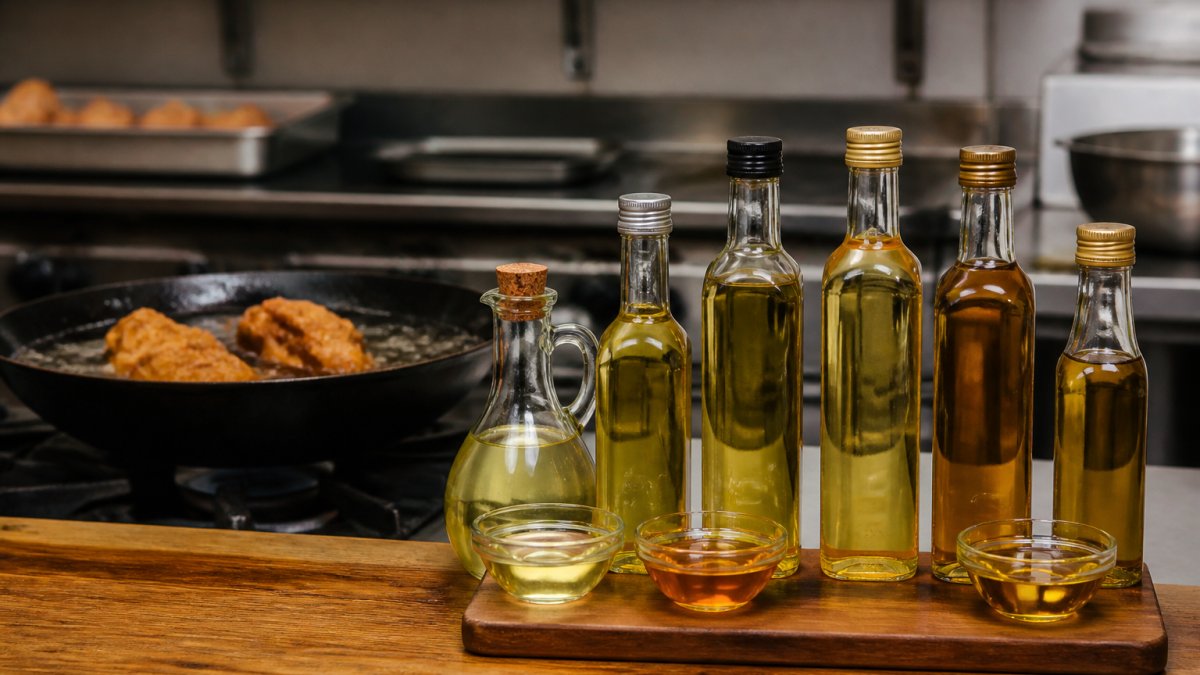
Canola oil is the best all-around peanut oil substitute for most home cooks. It is neutral, widely available, and costs less than most alternatives. Sunflower and avocado oil are strong upgrades for flavor-sensitive batches, while vegetable oil wins on price.
Quick Comparison: Smoke Point, Flavor, and Cost
| Oil | Smoke Point | Flavor | Best For |
|---|---|---|---|
| Canola | 468°F | Neutral | Everyday deep frying |
| Vegetable | Moderate | Neutral | Budget batches |
| Sunflower | High | Neutral | Crisp, clean crust |
| Avocado | Very high | Neutral | High-heat searing and frying |
| Beef tallow | High | Rich, savory | Restaurant-style crunch |
The canola smoke point figure comes from PuriMax's frying oil guidance, which positions canola as a lower-cost, more available stand-in for peanut oil. Watch out: an oil labeled "cold-pressed" or "unrefined" will smoke earlier than the refined version, so check the label before you heat it.
Ranked by Use Case
- Canola, best everyday default. Neutral flavor, refined versions hold up through a full batch of chicken, and it is stocked in nearly every grocery store. Best for weeknight frying and large batches.
- Vegetable oil, best budget pick. It is a blend, so performance varies by brand, but it fries chicken competently and costs less than most single-source oils. Best when you are feeding a crowd and volume matters more than nuance.
- Sunflower oil, best for a clean, light crust. High smoke point and a clean taste make it a solid choice when you want a light golden crust. Refined sunflower is the version to buy for deep frying.
- Avocado oil, best for high-heat stability. Highest smoke point of the group and stays stable under hard heat, though it costs more per bottle. Best for smaller, flavor-focused batches or searing.
- Beef tallow, best for restaurant-style crunch. Rich, savory flavor and a high smoke point. It is not a neutral substitute, it changes the taste of the crust, but it is the pick when you want a heavier, more savory result.
Cost Per Use, Not Cost Per Bottle
The bottle price is misleading because deep frying uses far more oil than shallow frying. A large pot of oil for deep frying can take a quart or more, while shallow frying in a skillet uses a fraction of that.
- Deep frying (large pot): canola and vegetable oil keep cost per batch sane because you can buy them in larger containers. Avocado oil is hard to justify at this volume unless you are frying a small batch.
- Shallow frying (skillet): you use less oil, so a pricier option like sunflower or avocado becomes affordable per batch.
- Reuse changes the math: an oil you can filter and reuse two or three times lowers its effective cost per batch. Oils that break down or pick up off-flavors quickly do not.
A common pattern among home fryers is to keep one neutral, affordable oil for big batches and a smaller bottle of a premium oil for finishing or small-batch work.
Smoke Point Is a Starting Filter, Not the Finish Line
Smoke point tells you when an oil starts to visibly smoke, but it does not tell you how the oil performs through a full fry. Real frying performance depends on how an oil holds up through repeated heating, how neutral it tastes, and how much it costs per batch. An oil with a high smoke point can still pick up off-flavors or darken quickly after a couple of uses, and a lower-smoke-point oil can fry a single batch of chicken perfectly well if you hold the temperature steady.
Availability and Label Checks
Most grocery stores carry canola and vegetable oil year-round, and sunflower and avocado oil are common in larger stores and warehouse clubs. When you shop, check three things on the label: whether the oil is refined, whether it is a blend (vegetable oil usually is), and whether the package carries any allergen statement about shared facilities. That last check matters most for peanut-allergic cooks and is covered in the next section.
Peanut Allergy and Cross-Contact Precautions
If someone at your table has a peanut allergy, the oil is only half the risk. Cross-contact is the other half, and it is where home cooks and restaurants both slip up.
The distinction that matters is ingredient substitution versus safe handling. Choosing a peanut-free oil solves the ingredient question. It does nothing about peanut residue on a shared fryer, a contaminated utensil, or a breading mix processed in a facility that also handles peanuts.
Ingredient Substitution: What to Check on the Label
- Refined peanut oil and allergen labeling. Highly refined peanut oil is sometimes described as removed of the allergenic protein, but recommendations for allergic individuals should come from a doctor, not a label. If someone at your table has a diagnosed peanut allergy, treat any peanut-derived oil as off the table unless a clinician says otherwise.
- Shared-facility statements. Many flour blends, spice mixes, and breading products carry a "may contain" or "processed in a facility that also processes peanuts" statement. Check the package every time, because manufacturers change lines and suppliers.
- Cross-reactivity is not the same as cross-contact. A person with a peanut allergy may also react to other legumes depending on their specific diagnosis (pubmed.ncbi.nlm.nih.gov). That is a clinical question for their allergist, not something to infer from an oil label.
Cross-Contact: The Fryer and the Station
A peanut-free oil in a fryer that previously held peanut oil is not a peanut-free fryer. Oil residue clings to the walls, the basket, and the heating element, and a single shared batch can transfer enough protein to matter for a highly sensitive person.
- Use a dedicated fryer or pot that has never held peanut oil.
- Wash hands, utensils, and surfaces before breading.
- Avoid shared tongs and draining racks.
When You Order Out
Ask about fryer setup, not just the oil. A restaurant may fry in peanut-free oil but share a fryer with peanut-containing items, or use a breading that carries a shared-facility statement. Clear labeling and separate fryers matter more than any single ingredient choice. If the staff cannot answer confidently, that is useful information.
A Practical Sequence for a Peanut-Free Batch
- Confirm the oil is peanut-free and refined for frying.
- Check the breading, flour, and spice labels for shared-facility statements.
- Clean or dedicate the pot, basket, and tools.
- Fry the peanut-free batch first, before any peanut-containing food goes into the kitchen.
- Label and separate finished pieces so they are not mixed with other food.
That sequence separates the ingredient decision from the handling decision, which is the part most peanut-free frying advice skips.
The Right Oil Temperature for Fried Chicken
The right oil temperature for fried chicken is 350°F for most pieces, with dark meat and larger cuts sometimes needing a slightly lower start so the inside cooks before the crust darkens.
Too hot and the crust burns before the chicken is done. Too cool and the breading drinks oil and turns greasy. Hold your oil steady in the 325°F to 350°F range, and let it recover between batches.
How to Keep Fried Chicken Crispy After Frying
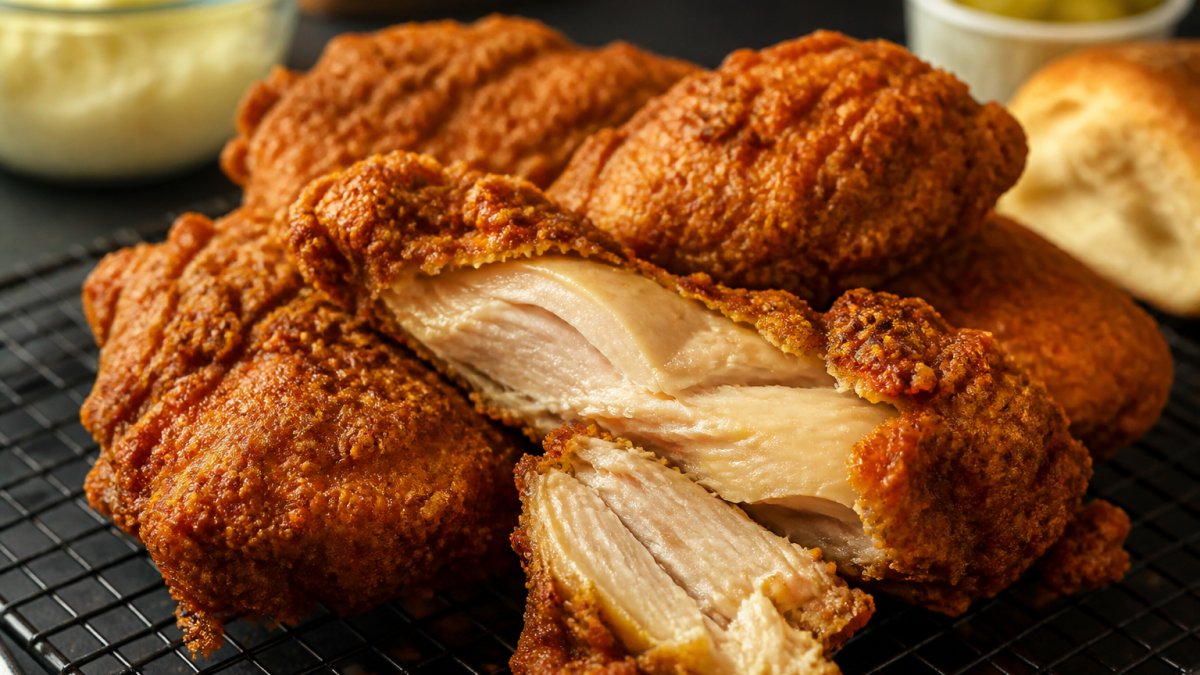
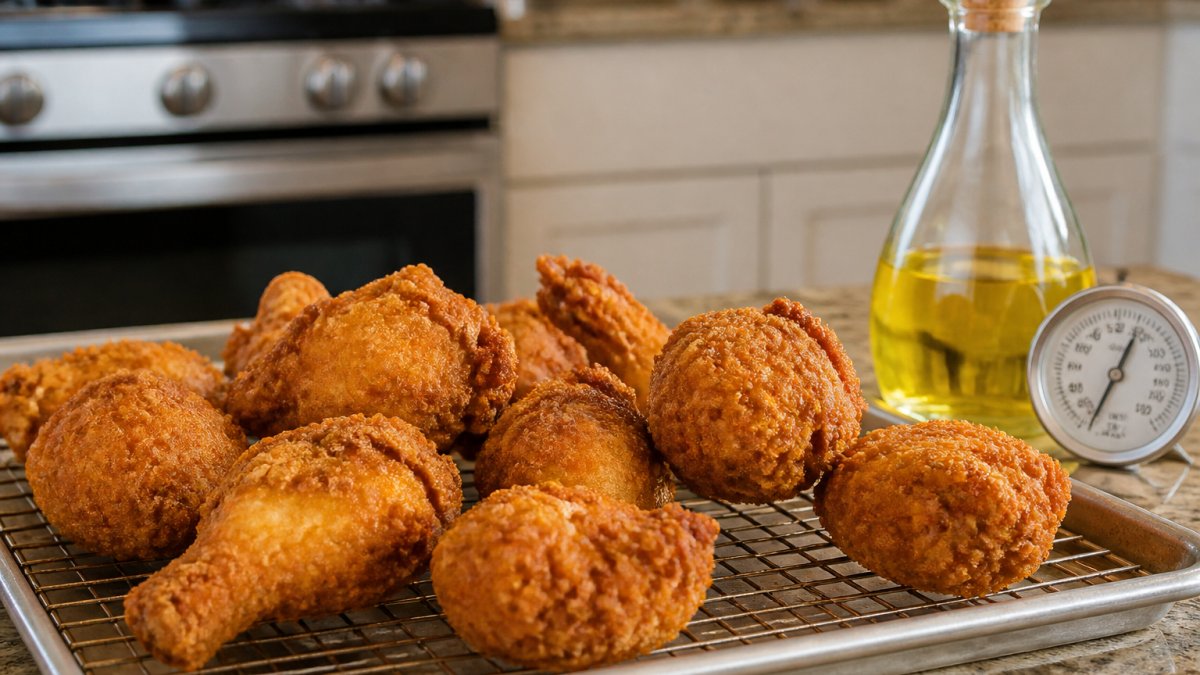
The trick to crispy fried chicken is airflow, not paper towels. Rest finished pieces on a wire rack set over a sheet pan so steam escapes instead of steaming the crust soft. Stacking chicken on a plate traps moisture and turns a crisp crust soggy within minutes.
- Drain on a rack, never a closed container
- Salt immediately after frying so it sticks
- Keep finished pieces in a warm oven with the door cracked
A cool, crunchy side helps too. If you are building a plate, fries and coleslaw round out a fried chicken meal without competing with the crust.
Reusing, Filtering, and Disposing of Frying Oil
Cooled oil can be reused a few times if you filter it well. Let it cool completely, strain out the crumbs through a fine mesh or coffee filter, and store it in a sealed container away from light.
Never pour used oil down the drain. Pour it into a sealed container and dispose of it with your trash, or check whether your local waste program accepts it.
Which Oil Fits Your Budget and Frying Method
Match the oil to how you fry. Deep frying in a large pot needs volume, so cost per bottle matters. Shallow frying uses less oil, so you can afford a pricier option. If you are feeding a crowd, canola or vegetable keeps the cost sane.
A dipping sauce is an easy add-on while you weigh your options. Cheese sauce is an affordable extra that pairs well with a crispy batch.
Try Peanut-Free, Halal Fried Chicken at Lava Hot Chicken
Our chicken is fried in beef tallow, not peanut oil, and our kitchen is Halal-certified. That means a peanut-free setup and a menu built around flavor first.
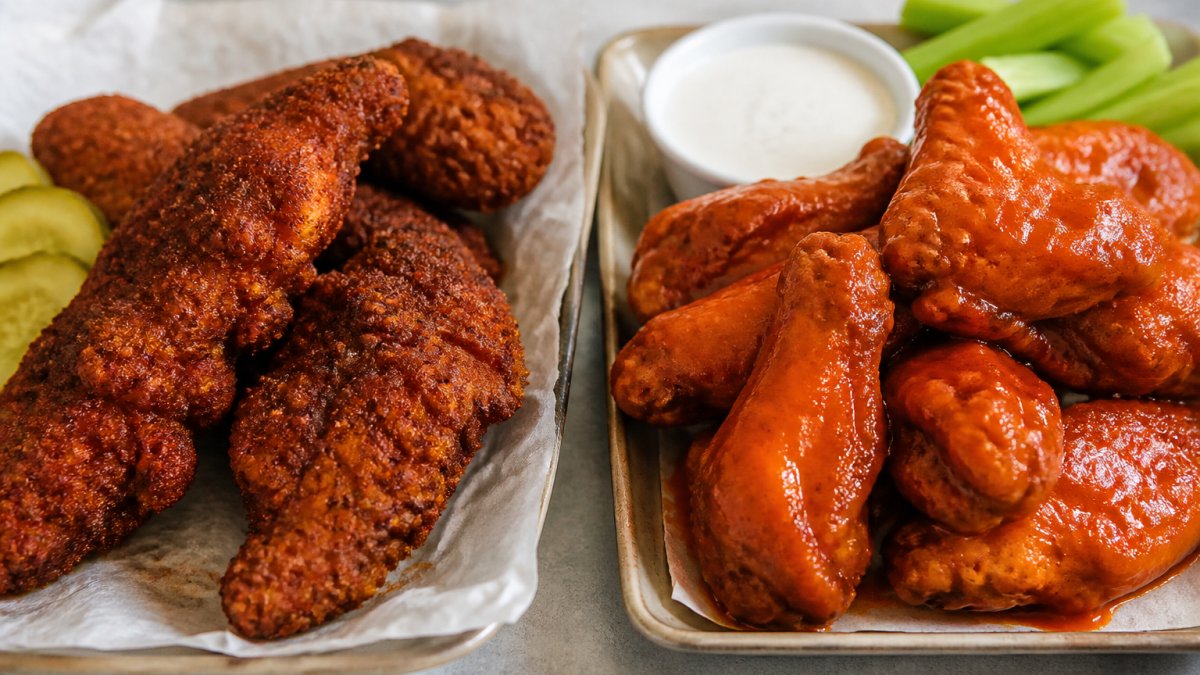
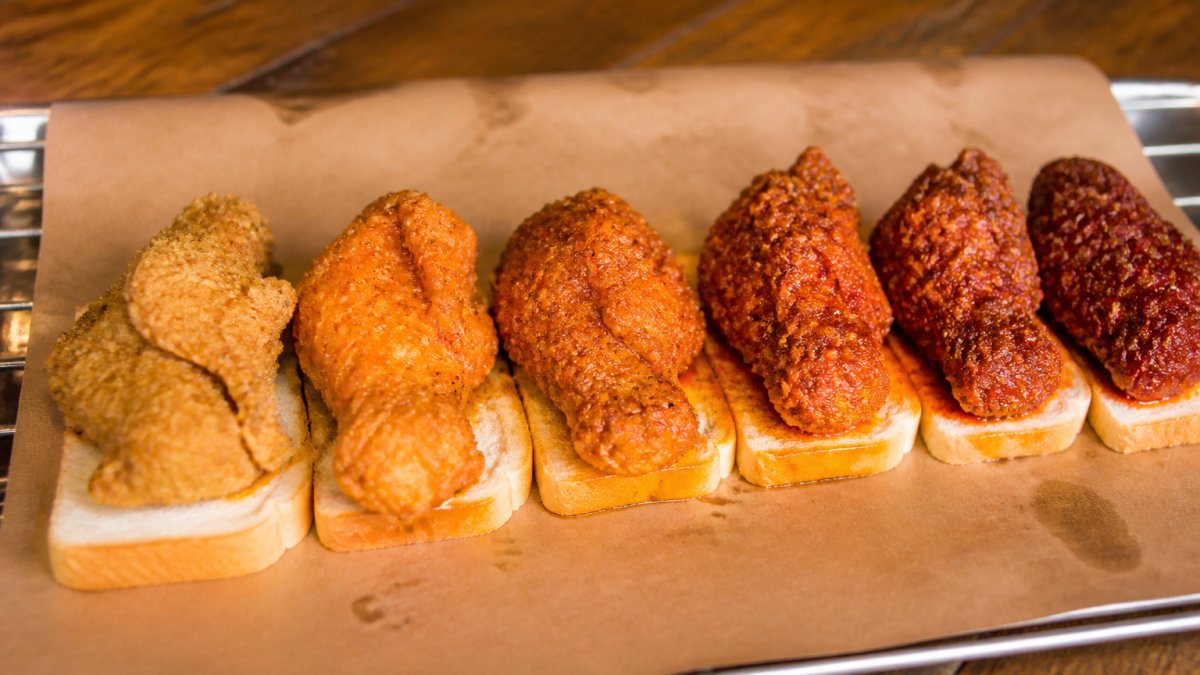
Pick your heat from five levels, from No Spice to pure Fire, so the whole table eats at the same meal. Our hand-prepped, double-dredged chicken comes out juicy with a crust that holds. Start with 10 Pc Boneless Wings or a batch of 10 Pc Wings and climb the ladder at your own pace.
Frequently Asked Questions
What is the best substitute for peanut oil when frying chicken?
Canola oil is the most practical peanut oil substitute for most home cooks. It has a smoke point of 468°F, a neutral flavor that lets the seasoning come through, and it costs less than peanut oil at most grocery stores. Vegetable oil and sunflower oil are close runners-up. If you want a higher smoke point and don't mind the price, avocado oil works well for deep frying, though its flavor is slightly more pronounced.
Can you fry chicken in canola oil instead of peanut oil?
Yes. Canola oil handles the 350°F to 375°F range that fried chicken needs without breaking down, and its neutral taste won't mask your breading or spice blend. Keep in mind that canola can start to smell faintly fishy after several reuses, so filter it after each batch and replace it once it darkens or foams. For shallow frying, canola performs just as well as it does in a deep pot.
What oil has a high smoke point for frying chicken?
Avocado oil, refined canola oil, and refined peanut oil all sit above 450°F, well past the 350°F to 375°F window fried chicken needs. Refined sunflower and safflower oils also qualify. Unrefined or cold-pressed oils, including extra-virgin olive oil, smoke at much lower temperatures and are a poor fit for deep frying. Check the label for 'refined' before you buy.
Can you reuse oil after frying chicken?
You can reuse frying oil two to three times if you filter it properly. Let the oil cool completely, strain it through a fine mesh sieve or cheesecloth into a clean container, and store it in a cool, dark place. Discard it when it turns dark, smells off, or foams when heated. Oil that has fried breaded chicken picks up flour particles quickly, so filter it the same day rather than letting it sit.
Frying at home is a balancing act of oil, heat, and timing, and one wrong variable can flatten a good batch. We take that guesswork off your plate. Lava Hot Chicken fries in beef tallow, offers five distinct spice levels, and serves Halal-certified chicken with our signature Lava Sauce. Get started with Lava Hot Chicken and taste a peanut-free, flavor-first batch without touching a thermometer.